



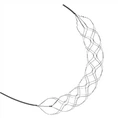

Stent retriever thrombectomy is a minimally invasive surgical procedure used in the treatment of ischemic stroke. It is a form of neurovascular intervention that involves the use of a stent retriever device that is threaded through a catheter to the site of the blockage in the brain. The device then grips the clot and pulls it out of the artery, restoring blood flow to the brain.
Stent retriever thrombectomy is a relatively new technique that has been developed in the field of interventional neuroradiology. It is primarily used to treat acute ischemic stroke caused by large vessel occlusion (LVO), which accounts for about 30% of all ischemic stroke cases. LVO refers to the blockage of one of the main arteries that supplies blood to the brain, such as the internal carotid artery, the middle cerebral artery, or the basilar artery.
The procedure is usually performed under local anesthesia by an interventional neuroradiologist, who specializes in the diagnosis and treatment of neurological conditions using minimally invasive techniques. The patient lies flat on a procedure table and a small incision is made in the groin or arm to access an artery. A long, thin catheter is then inserted into the artery and guided through the blood vessels to the site of the blockage in the brain.
Once the catheter is in position, the stent retriever device is threaded through the catheter and guided to the clot. The device is designed to expand and grip the clot, allowing the interventional neuroradiologist to gently tug on the device to remove the clot from the artery. The process is repeated if necessary, until all the clot has been removed and blood flow to the brain has been restored.
Stent retriever thrombectomy is a highly effective treatment for ischemic stroke caused by LVO, with studies showing that it can substantially improve patient outcomes. In particular, stent retriever thrombectomy has been shown to significantly reduce the risk of disability and improve neurological function in patients with acute ischemic stroke.
However, stent retriever thrombectomy is not appropriate for all patients with ischemic stroke. The procedure is only effective in treating large vessel occlusion and is not appropriate for small vessel occlusion, which is the most common cause of ischemic stroke. In addition, the procedure can be risky and requires careful patient selection and experienced operators to minimize the risk of complications.
In conclusion, stent retriever thrombectomy is a minimally invasive surgical procedure that can effectively treat ischemic stroke caused by large vessel occlusion. It is important for patients and healthcare professionals to be aware of this technique and its potential benefits in order to improve patient outcomes and reduce the burden of stroke.