



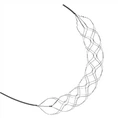

Stent retriever with aspiration catheter, also known as mechanical thrombectomy, is a medical procedure used to treat patients who have suffered from acute ischemic stroke.
Stroke is a severe medical emergency that can leave patients with long-lasting disabilities or even death. There are two main types of stroke: ischemic and hemorrhagic. Ischemic stroke is caused by blockages in blood vessels that deprive the brain of oxygen and nutrients, while hemorrhagic stroke results from bleeding in the brain. Acute ischemic stroke is the most common type of stroke, accounting for about 87% of all cases.
The standard treatment for acute ischemic stroke is intravenous tissue plasminogen activator (tPA), which can dissolve blood clots and restore blood flow. However, the effectiveness of tPA is limited to the first few hours after stroke onset, and a significant number of patients do not respond to this treatment. In recent years, a new technique called mechanical thrombectomy has emerged as a promising alternative for patients with acute ischemic stroke who are not eligible for or have failed to respond to tPA treatment.
Mechanical thrombectomy involves the use of a stent retriever with aspiration catheter to remove blood clots from occluded blood vessels in the brain. The stent retriever is a device consisting of a wire mesh tube that is deployed in the affected artery, allowing the clot to become trapped and removed when the device is retrieved. The aspiration catheter is used to suction the clot out of the artery.
The procedure is generally performed under sedation or general anesthesia. A catheter is inserted into the femoral artery in the groin and threaded up to the affected artery in the brain under X-ray guidance. Once the stent retriever is deployed inside the clot, the device is gently pulled back to remove the clot from the artery. The aspiration catheter is then inserted to suction the clot out of the artery and into a collection bag for analysis.
Stent retriever with aspiration catheter is a relatively new technology that has rapidly improved in recent years. The initial devices used in mechanical thrombectomy were less effective than the current generation of devices. However, thanks to advances in technology and engineering, the latest stent retrievers have higher efficacy rates and lower rates of complications.
One of the significant developments in stent retriever technology is the use of a self-expanding stent retriever. Unlike the older-generation devices, which required manual manipulation of the stent, self-expanding stent retrievers can be deployed with minimal force and without the need for manual manipulation. This means that the stent can be deployed more quickly, reducing the time to complete the procedure.
There is a growing body of research supporting the use of stent retriever with aspiration catheter for acute ischemic stroke. A recent meta-analysis of randomized controlled trials found that mechanical thrombectomy with stent retriever is more effective than standard medical care alone in improving clinical outcomes, reducing mortality, and achieving good functional outcomes (Goyal et al., 2016).
Moreover, a trial published in The New England Journal of Medicine showed that mechanical thrombectomy with stent retriever within 6 hours after the onset of stroke symptoms is associated with better outcomes than tPA treatment alone (Nogueira et al., 2018). However, research is ongoing to determine the optimal time window for intervention and the best selection criteria for patients.