



In the field of precise and minimally invasive neurointervention, the key to successfully treating cerebrovascular diseases lies in establishing a stable and unobstructed "lifeline." This pathway allows various therapeutic devices to safely reach the deep and tortuous intracranial blood vessels. Distal access catheters are the core equipment for constructing this pathway and are hailed as the "highway" of neurointerventional surgery.
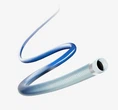
Distal access catheters are large-diameter, highly supportive microcatheters with flexible tips. They are typically inserted via the femoral or radial artery and, guided by a guidewire, delivered to major intracranial vessels such as the internal carotid artery and vertebral artery, or even more distal intracranial vessels. Their core function is to provide a stable delivery platform and withdrawal path for subsequent therapeutic devices, such as coils, flow diverters, stents, and thrombectomy stents.
Its main neurointerventional applications include:
1. Thrombectomy for acute ischemic stroke
In aspiration thrombectomy, the distal access catheter is positioned as close as possible to the thrombus and connected to the aspiration pump to provide strong negative pressure for direct aspiration. In stent-assisted aspiration thrombectomy, the distal access catheter provides support for the release and retrieval of the thrombectomy stent while simultaneously performing aspiration, significantly improving vascular recanalization rate and efficiency.
2. Embolization of Intracranial Aneurysms
In treating ruptured or unruptured cerebral aneurysms, a distal access catheter is placed proximal to the parent artery, providing stable "proximal support" for the microcatheter delivering coils. This is crucial for cases with tortuous pathways and complex aneurysm morphologies, effectively preventing microcatheter displacement or ejection during the procedure and ensuring precision and safety of the embolization process.
3. Flow diverter implantation
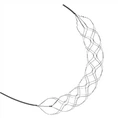
Flow diverters (such as dense mesh stents) have relatively large and rigid delivery systems. The distal access catheter provides a smooth transition and strong proximal support, ensuring that the device can be smoothly and accurately deployed to the parent artery segment where the aneurysm neck is located.
4. Intracranial Artery Stenosis Stenting
A balloon-expandable or self-expanding stent is delivered and deployed to the stenotic site. The strong support of the distal access catheter ensures the stent system can pass smoothly through severely stenotic lesions and be precisely positioned.
Compared to traditional guiding catheters or intermediate catheters, distal access catheters offer four major advantages: superior proximal support, enhanced positioning capability, improved surgical safety and success rates (stabilized platform, blood flow occlusion and thrombus protection, and reduced vasospasm), and increased surgical efficiency and simplified operation.
Distal access catheters are a landmark tool in the field of neurointervention. By providing stable and reliable proximal support, they have significantly expanded the therapeutic boundaries of neurointerventional surgery, improving the safety, effectiveness, and efficiency of treating complex cerebrovascular diseases.