



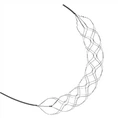

The advantages of distal access catheters are obvious compared to traditional guiding catheters or intermediate catheters.
1. Superior proximal support
This is the core value of distal access catheters. Their walls typically employ a multi-layered composite structure (such as braided metal mesh), providing strong resistance to bending and thrust transmission, effectively resisting the reaction forces caused by vascular tortuosity, and providing a stable "fulcrum" for distal procedures.
2. Enhanced Reachability
Thanks to the flexible tip design and excellent tracking capabilities, modern distal access catheters can reach more distant and tortuous intracranial vessels, such as the M1/M2 segment of the middle cerebral artery. This means shorter surgical access, more direct operation, and greater efficiency.
3. Improved Surgical Safety and Success Rate
-Stable Platform: Reduces intraoperative instrument movement and displacement, lowering the risk of vascular injury and perforation.
- Blood Flow Intervention and Thrombus Protection: During thrombectomy, the distal catheter tip is positioned close to the thrombus to temporarily block forward blood flow, preventing thrombus rupture and escape to more distal vessels. It also provides a pathway for repeated aspiration and manipulation without repeatedly passing through the lesion.
- Reduced Vasospasm: The optimized tip design and flexibility reduce irritation to the vascular intima.
When selecting a distal access catheter, operators typically focus on the following characteristics:
1. Tip design: A soft tip (often with a hydrophilic coating) is essential for safe passage through tortuous vessels.
2. Balance between support and flexibility: Sufficient support is needed proximally, while good flexibility is required distally to navigate tortuous vessels; this presents a complex and carefully designed challenge.
3. Lumen diameter and liner: A larger lumen allows for stronger suction and the passage of larger instruments. A smooth liner reduces frictional resistance during instrument passage.
4. Resistance to collapse and tracking: A multi-layered structure ensures the lumen does not collapse in tortuous vessels and allows for smooth guidewire advancement.