



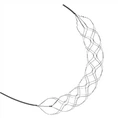
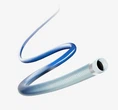
Stroke is the leading cause of death in my country-causing over 4 million new cases annually, with acute ischemic stroke accounting for over 80%. When large intracranial vessels (such as the terminal internal carotid artery or the M1 segment of the middle cerebral artery) become occluded, thrombolytic therapy alone (within a 4.5-hour time window) is insufficient to completely remove the thrombus, making mechanical thrombectomy a crucial solution. The intracranial aspiration catheter is one of the core devices for achieving efficient thrombus removal in mechanical thrombectomy.
I. What is an Intracranial Aspiration Catheter?
An intracranial aspiration catheter is an interventional device used for mechanical thrombectomy of large vessel occlusion (LVO) in acute ischemic stroke. It is inserted into an intracranial vessel through femoral artery puncture and uses negative pressure aspiration to directly remove the thrombus, restoring cerebral blood flow. It is not a standalone thrombectomy tool but is often combined with stent thrombectomy (such as the "aspiration-first" ADAPT technique) and is a core first-line thrombectomy protocol recommended by guidelines.
II. Core Technologies: Balancing Safety and Efficiency High-quality aspiration catheters must overcome the contradiction between complex vascular anatomy and efficient thrombus removal. The core design focuses on four dimensions:
1. Rigidity Gradient Control:** The tip uses ultra-soft medical-grade PEBAX material (hardness <30D) to avoid damage to tortuous intracranial vessels; the proximal tip hardness is increased to over 70D to ensure maneuverability and prevent catheter kinking.
2. Hydrophilic Lubricating Coating:** The surface is coated with a low-friction hydrophilic material, providing instant lubrication upon entering the bloodstream, reducing resistance by over 60% and enabling rapid arrival at the target vessel.
3. Large Lumen Optimization:** Maximizing the lumen diameter (≥1.6mm) within the standard 6F outer diameter, increasing negative pressure aspiration flow rate, and achieving a single thrombus aspiration length of over 20mm.
4. Controllable Tip Shaping:** Some high-end catheters support pre-shaping, precisely matching the complex vascular anatomy of the anterior cerebral artery, posterior circulation, etc., improving the success rate of thrombus removal.
III. Clinical Value: Reshaping the Stroke Treatment Landscape
The application of intracranial aspiration catheters has achieved three major breakthroughs in the treatment of acute ischemic stroke:
Improved Recanalization Rate: When combined with ADAPT technology, the recanalization rate (mTICI 2b/3) reaches over 85%, a 15% improvement compared to stent thrombectomy alone;
Extended Time Window: Some patients can achieve effective thrombectomy via aspiration catheter within 24 hours of symptom onset, breaking the traditional "6-hour golden window" limitation;
Reduced Complications: Aspiration can directly remove thrombi, avoiding damage to the vessel wall caused by stent expansion, reducing the incidence of vascular dissection and hemorrhagic transformation by 10%.