




Controversy over timing of surgery
Surgical treatment is of great significance in preventing the recurrence of aneurysms, reducing complications, and reducing mortality. It is an effective method for the thorough treatment of SAH. Generally, surgery within 24 hours of the onset of SAH is called ultra-early surgery; surgery within 3 days is called early surgery; surgery between 3 to 10 days is defined as mid-term surgery; surgery after 10 days is defined as late surgery. Early surgical treatment can not only reduce the risk of re-bleeding, but also clear the blood accumulation in the cerebral cistern, create conditions for subsequent treatment, and reduce the incidence and severity of CVS. The biggest risk of delaying surgery is the possibility of rebleeding at any time.
The main goal of SAH treatment is to occlude the intracranial aneurysm to prevent re-bleeding of the aneurysm. There are two main methods: endovascular treatment and craniotomy clipping. Since the risk of rebleeding after SAH is high and the prognosis is extremely poor once rebleeding occurs, whether craniotomy or endovascular treatment is chosen, it should be performed as soon as possible to reduce the risk of rebleeding. As microsurgical and endovascular treatment techniques advance, the assessment of appropriate treatment options based on patient and aneurysm characteristics continues to improve.
WHO guidelines recommend that early surgery is recommended for patients with grade I and II aneurysmal SAH, early surgery is recommended for grade III patients whose condition improves, late surgery is recommended for grade III patients whose condition worsens, and surgery is not recommended for grade IV and V patients. The AHA guideline strongly recommends aneurysm clipping for the treatment of aneurysmal SAH to reduce the incidence of rebleeding after SAH. It is believed that there is no evidence to show whether the therapeutic effect of early surgery is different from that of late surgery. Early surgery is recommended for patients with better grades.
Surgery, early or late surgery for other patients depends on the situation. Canadian guidelines recommend early surgery for patients with well-graded SAH and caution in mid-term surgery because it may cause delayed CVS. European guidelines recommend: Treat aneurysms as early as possible to reduce the risk of rebleeding if conditions permit; if possible, intervention should be performed within 72 hours of the onset of symptoms.
Patient selection for interventional therapy
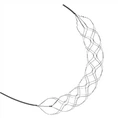
The indications for interventional therapy mainly include two aspects: 1. If the patient is in a restricted area for direct surgery or the condition does not allow surgery, multiple parent artery occlusion is performed. Such as giant aneurysms, including the cavernous sinus segment, petrous segment, basilar artery segment or vertebral artery of the internal carotid artery; fusiform wide-neck or no carotid aneurysms; surgical clipping failure; systemic conditions do not allow or the patient refuses craniotomy 2. Preserve the patency of the parent artery, similar to saccular aneurysms that can be treated by direct craniotomy; use stent-assisted aneurysm embolization therapy or treat large aneurysms through blood flow direction devices.
Compared with surgical treatment, endovascular interventional treatment has the characteristics of less trauma, low risk, and wide indications, and the technology of endovascular interventional treatment has become increasingly mature. However, endovascular interventional therapy still has the following contraindications: 1. Severe vascular tortuosity and arteriosclerosis. 2. The aneurysm is too small for the catheter to enter; the aneurysm is located at the distal end of the blood vessel and cannot be reached by existing microcatheter technology. 3. Huge aneurysms are not suitable for embolization. 4. Patients with irreversible bleeding disorders or bleeding tendencies.
In short, surgical treatment and endovascular interventional treatment each have their own advantages and limitations, and both have irreplaceable roles in the treatment of aneurysms. Timely neck clipping or endovascular embolization of ruptured aneurysms after SAH as well as reasonable postoperative treatment are of great significance in reducing their recurrence rate, mortality and disability rate.