


Stroke is a leading cause of mortality and morbidity worldwide. In recent years, the development of mechanical thrombectomy devices has revolutionized the treatment of acute ischemic stroke caused by large vessel occlusion. These devices generate radial force during thrombectomy, which can cause vessel wall injury. Therefore, understanding and minimizing the radial force of these devices is crucial for improving clinical outcomes and reducing complications.
The radial force of a stent retriever thrombectomy device is defined as the force exerted radially by the device on the vessel wall during the thrombectomy procedure. This force is determined by the design and properties of the device, including the shape and size of the thrombectomy tip, the rigidity of the device shaft, and the material and surface characteristics of the device.
Recent studies have shown that high radial force can cause endothelial damage, intimal dissection, and vessel perforation, which can lead to thrombus embolization, hemorrhage, and other complications. Therefore, minimizing the radial force of stent retrieval thrombectomy devices is critical for improving vessel wall safety and reducing the risk of adverse events.
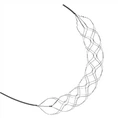
To achieve this goal, several strategies have been proposed and tested. One approach is to optimize the shape and size of the thrombectomy tip to reduce the contact area with the vessel wall and minimize the force needed to extract the thrombus. For example, the stent retriever device, which is widely used in mechanical thrombectomy, has a self-expanding mesh design that conforms well to the vessel lumen and requires less force to achieve successful clot retrieval.
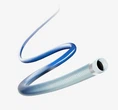
Another strategy is to improve the flexibility and elasticity of the device shaft to reduce the transmission of radial force to the vessel wall. This can be achieved by using materials with high elasticity, such as nitinol, and designing the shaft with a variable stiffness profile that can adapt to the curvature and tortuosity of the vessel.
Furthermore, surface modification of the device can also reduce the friction and adhesion between the device and the vessel wall, which can lower the radial force needed to extract the thrombus. Coating the device with hydrophilic or heparin-like materials can improve lubricity and reduce surface tension, while adding microtextures or nanotubes can increase surface area and reduce adhesion.
Additionally, using high-resolution imaging, such as optical coherence tomography (OCT) or intravascular ultrasound (IVUS), can provide real-time feedback on the radial force and vessel wall interaction during thrombectomy, allowing for adjustments and optimization of the thrombectomy technique.
All in all, understanding and minimizing the radial force of stroke clot retrieval thrombectomy device is essential for optimizing the safety and efficacy of thrombectomy procedures. By optimizing the shape, size, and properties of the device, as well as incorporating new imaging and feedback technologies, we can minimize vessel wall injury and improve clinical outcomes for stroke patients.