




Stroke is one of the leading causes of death and disability worldwide, affecting millions of people every year. It occurs when blood flow to the brain is disrupted, leading to brain damage and neurological deficits. Ischemic stroke, which accounts for about 85% of all stroke cases, is caused by the obstruction of a blood vessel by a blood clot or thrombus. Clinical guidelines for the management of acute ischemic stroke recommend intravenous thrombolysis with tissue plasminogen activator (tPA) within 4.5 hours of symptom onset as the standard of care. However, only a minority of patients are eligible for tPA due to various contraindications and time windows. In recent years, the advent of stent retriever thrombectomy (SRT) devices has revolutionized the field of stroke treatment by providing a safe and effective alternative for eligible patients. This article aims to review the key aspects of SRT devices, their applications and advantages.
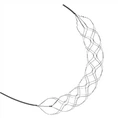
Stent retriever thrombectomy devices, also known as mechanical thrombectomy devices, are innovative tools designed to remove blood clots from occluded vessels in the brain. They consist of a flexible, self-expanding metallic stent that is mounted on a delivery wire, which can be navigated to the site of occlusion under fluoroscopic guidance through the femoral artery. Once the stent retrieval reaches the clot, it is deployed and expanded, creating a mesh-like structure that entraps the thrombus. The stent retriever device is then gently pulled back into the catheter, along with the trapped clot, thus restoring blood flow to the affected area of the brain. The whole process can be completed in a matter of minutes, providing rapid relief of the stroke symptoms and saving brain tissue from irreversible damage.
Clot retrieval devices have been shown to be highly effective in treating ischemic stroke caused by large vessel occlusion (LVO), which is associated with high rates of morbidity and mortality. Several randomized controlled trials (RCTs) and meta-analyses have demonstrated the superiority of SRT over standard medical therapy alone in terms of recanalization rates, functional outcomes, and survival rates. The landmark MR CLEAN trial, conducted in the Netherlands, showed that SRT combined with standard medical therapy resulted in a 13.5% absolute reduction in mortality and disability at 90 days compared to medical therapy alone. The ESCAPE trial, conducted in Canada, found similar results, with 53% of the SRT group achieving functional independence at 90 days, compared to 29% in the medical therapy group. The REVASCAT trial, conducted in Spain, also showed a significant improvement in functional outcomes and survival rates with Stent retriever compared to medical therapy alone.
Thrombectomy stent retriever devices offer several advantages over other stroke interventions, such as tPA and surgical thrombectomy. Firstly, they can be used in a broader time window, up to 24 hours or beyond from symptom onset, depending on the patient's clinical and imaging characteristics. This is particularly important for patients who present late or who are ineligible for tPA due to contraindications. Secondly, stent retriever device has a high recanalization rate, with up to 90% of patients achieving successful reperfusion of the occluded vessel. This translates into better functional outcomes and lower rates of disability and death. Thirdly, Stent retrieval is a minimally invasive procedure that can be performed under conscious sedation or general anesthesia, depending on the patient's preference and condition. It has a lower risk of bleeding, infection, and other complications than surgical thrombectomy, which requires general anesthesia and a craniotomy. Finally, SRT is cost-effective, with a lower overall cost and shorter hospital stay than surgical procedures.
Stent retriever represent a game-changing intervention in the management of acute ischemic stroke caused by LVO. They offer a safe, effective, and minimally invasive alternative to traditional stroke treatments, such as tPA and surgical thrombectomy. Stent retrieval have been shown to improve recanalization rates, functional outcomes, and survival rates in eligible patients, with a low risk of complications. However, careful patient selection, operator training, and ongoing quality assurance are necessary to ensure optimal outcomes and minimize potential risks. With further research and development, SRT devices hold great promise for the future of stroke treatment and prevention.