



Stroke is one of the leading causes of death and disability worldwide. In recent years, mechanical thrombectomy has emerged as an effective treatment for acute ischemic stroke caused by large vessel occlusions. Since the Solumbra technology was proposed in 2012, SWIM technology has undergone many technical improvements, from ARTS technology in 2016, SAVE technology in 2018, to today's SWIM technology, the full name of SWIM technology is Stent Retriever Combing With Intracranial Support Aspiration Catheter for Mechanical Thrombectomy. Among the various techniques used for mechanical thrombectomy, SWIM has gained popularity due to its high success rate and favorable clinical outcomes. SWIM technology is based on stent thrombectomy as the cornerstone, combined with catheter aspiration to realize the comprehensive treatment technology of the dual mechanism of stent grasping and catheter aspiration.
SWIM Technique
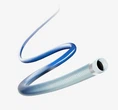
The SWIM technique involves the use of a combination of devices to remove the thrombus from occlusion vessel. The procedure starts with the insertion of an intracranial support catheter into the affected vessel. The catheter serves as a guide for the other devices used in the procedure.
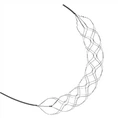
A stent retriever is navigated through the catheter and placed into the affected vessel and beyond the site of occlusion. then the stent is deployed manipulating it to expand and capture the thrombus. The stent along with the thrombus is then pulled back into the catheter and removed from the vessel.
In addition to the stent retriever, the SWIM technique also employs the use of aspiration catheters. These catheters are used to remove remaining clots that may be left after the use of the stent retriever. The aspiration catheter is inserted through the guide catheter and directed towards the site of occlusion. Negative pressure is then applied to the catheter, which aspirates the clot and removes it from the vessel.
Benefits of the SWIM Technique
The SWIM technique has several benefits over other mechanical thrombectomy techniques. First, the combination of the retriever stent and aspiration catheter ensures that the majority of the thrombus is removed from the vessel to reduce the risk of re-occlusion.
Second, the use of an intracranial support catheter provides additional support during the procedure to reduce the risk of vessel injury. This support also allows for faster and easier navigation of the stent retrieval and aspiration catheter through the vessel.
Finally, clinical studies have shown that the SWIM technique is associated with a high rate of successful reperfusion and a low rate of complications. The high success rate can improve clinical outcomes for patients, including reduced disability and lower mortality rates.
The SWIM technique represents an effective and safe option for the treatment of acute ischemic stroke caused by large vessel occlusions. The combination of the stent retriever and aspiration catheter along with the use of an intracranial support catheter has been shown to provide optimal results with minimal risk. Therefore, the SWIM technique has become a popular choice among interventional neuroradiologists for the treatment of acute ischemic stroke.