



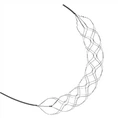
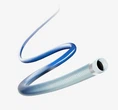
SWIM technology, that is, intracranial support catheter-assisted stent thrombectomy + aspiration technology, is currently the most advanced intracranial arterial thrombectomy technology, which can effectively improve the efficiency of thrombus removal, reduce the number of operations, reduce the occurrence of distal embolism, and reduce operation time.
For the endovascular treatment of acute ischemic stroke, how to quickly, effectively and safely recanalize the blood vessel is the premise of obtaining a good prognosis. With the continuous development of new materials and technologies, the use of stent retriever combined with catheter vascular recanalization technology provides a new treatment for acute ischemic stroke.
Operation Steps of SWIM Technology
1. Choose a 6F long sheath or 8F guide catheter, and insert it into the internal carotid artery;
2. Advance the catheter along the 0.035 guide wire to the petrous segment of the internal carotid artery or the cavernous sinus segment;
3. Advance the microcatheter to the distal end of the thrombus, After the stent retriever was inserted into the microcatheter, the first reflow phenomenon occurred and stayed for 3-5 minutes;
4. If the environment of the vascular path is good, advance the catheter coaxially to the ophthalmic artery segment through the microcatheter and the micro guide wire;
5. If it cannot be successfully advanced, use the tension after the stent is opened to pull the stent while advancing catheter into the ophthalmic artery segment;
6. When approaching the thrombus occlusion site, pull back the stent retriever to remove the thrombus while using aspiration catheter to aspirate the thrombus at the same time;
7. After the stent is withdrawn from the body, observe whether there is blood backflow when aspiration catheter is aspirating.
8. If there is no backflow, you can gently Withdraw catheter, and then perform aspiration;
9. If there is reflux, you can stop the catheter and use angiography to observe whether the distal blood vessels are unobstructed.
10. If there is still no blood return after aspiration catheter is withdrawn, it is necessary to consider whether there is a large thrombus blocking catheter. At the some time, aspiration catheter should be withdrawn from the body under negative pressure aspiration.
Advantages of SWIM Technology
The combination of stent thrombectomy and short-distance aspiration
- The synergistic effect improves the thrombectomy efficiency and shortens the thrombectomy time.
Reach the distal position of the blood vessel, large inner diameter lumen short-distance aspiration
- Reducing the risk of embolism of important branches at the distal and proximal ends.
Reach the distal position of the blood vessel, shorten the pull-back distance
- Reducing the potential risk of endothelial injury and perforator displacement and tearing.
Reach the distal position of the blood vessel and placed at close position
- Reducing the operating time of the microcatheter when retrieving the thrombus.