



In the field of neurointerventional therapy, endovascular treatment of acute ischemic stroke is an important means to improve the prognosis of patients. As two key devices, aspiration catheters and thrombectomy stent retrievers play an important role in opening occluded blood vessels and restoring cerebral blood perfusion. However, how to reasonably select aspiration catheters and thrombectomy stent retrievers based on the patient's specific condition, vascular lesion characteristics and other factors is an important clinical decision-making issue faced by neurointerventional physicians.
I. Characteristics and application of aspiration catheter
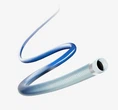
Characteristics: The aspiration catheter directly extracts the thrombus from the blood vessel through the principle of negative pressure suction. Its advantages are that the operation is relatively simple, the operation time may be short, the mechanical stimulation to the blood vessel wall is relatively small, and the risk of complications such as vascular dissection and perforation is reduced. In addition, for some soft and fresh thrombi, the aspiration catheter can often achieve better thrombus removal results. Some aspiration catheters have good permeability and can smoothly reach tortuous or narrow blood vessels.
Applicable situations:
1. Small vessel lesions: In some relatively small vessels, such as the M2 branch vessels of the middle cerebral artery, the relatively slender design of the aspiration catheter makes it easier to enter and is less likely to cause damage to small vessels. Thrombi in small vessels are usually small in size, and the aspiration catheter can effectively suck them out and restore vascular patency.
2. Fresh thrombi: For patients with a short onset time (usually within a few hours), the thrombi are relatively loose and fresh. At this time, the negative pressure suction effect of the aspiration catheter can more efficiently remove the thrombi. For example, within 3-4.5 hours of the onset of acute ischemic stroke, fresh thrombi can be easily directly sucked out by the aspiration catheter, thereby quickly restoring cerebral blood flow.
II. Characteristics and application of thrombectomy stent retriever
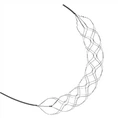
Characteristics: The thrombectomy stent retriever is released to the thrombus site, fits tightly with the thrombus, and then removes the stent together with the thrombus. Its outstanding point is that it has a stronger grasping ability for larger and harder thrombi, which can effectively restore blood vessel recanalization. The design of the thrombectomy stent retriever can better adapt to different vascular morphologies and show better thrombectomy effect in complex vascular lesions. In addition, after removing the thrombus, the thrombectomy stent retriever can also play a certain supporting role on the blood vessels, which helps to maintain the patency of the blood vessels.
Applicable situations:
1. Large vessel occlusion: For occlusion of large vessels such as the terminal of the internal carotid artery and the M1 segment of the middle cerebral artery, the thrombectomy stent retriever can effectively remove large-volume thrombi with its powerful grasping ability. The thrombi in these areas are often hard in texture, and the aspiration catheter may be difficult to completely remove. The thrombectomy stent retriever can better solve this problem and improve the vascular recanalization rate.
2. Chronic or old thrombi: When the thrombus has formed for a long time and the texture becomes hard, the thrombectomy stent retriever can better grasp the thrombus and remove it. Compared with the aspiration catheter, the thrombectomy stent retriever is more effective in treating this type of thrombus.
3. Lesions with vascular stenosis: In some cases where thrombus formation occurs on the basis of vascular stenosis, the thrombectomy stent retriever can not only remove the thrombus, but also play a certain supporting role in the stenosis, improve the morphology and hemodynamics of the blood vessels, and reduce the risk of thrombus recurrence.
In neurointerventional surgery, aspiration catheters and thrombectomy stent retrievers each have their own characteristics and applicable situations. Neurointerventional physicians need to comprehensively consider multiple factors such as the patient's individual factors, vascular lesion characteristics, and the specific situation of thrombosis, weigh the pros and cons, and make the most suitable choice for the patient. Reasonable selection of equipment can not only increase the rate of vascular recanalization and improve the patient's prognosis, but also reduce the risk of surgical complications. With the continuous development of neurointerventional technology, more optimized equipment and treatment strategies may appear in the future to further improve the effect of endovascular treatment of acute ischemic stroke.