



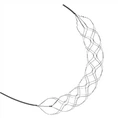
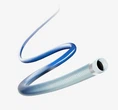
Building a stable access is the basis of neurointerventional surgery. Access refers to the vascular hiccup path from the puncture site to the target blood vessel for treatment, also known as the "access route". How to build the access and what kind of guide catheter material to use are crucial. Intravascular intervention is the most commonly used method for treating intracranial aneurysms, and building a good access is the first step in aneurysm embolization treatment. Choosing a suitable embolization access is a necessary guarantee for the successful completion of aneurysm embolization treatment. This article introduces the options for building access in intracranial aneurysm embolization.
During aneurysm embolization, a good access must meet at least three elements: stable, thick and high. Stability is the most basic requirement for the channel, which can provide sufficient support for distal operations so that it does not slide up and down to affect distal operations, and ensure that the channel does not affect distal blood flow. Thickness is based on stability, which means that the inner diameter of the channel, especially when it is necessary to accommodate multiple sets of pipelines, ensures that the friction between each other is not too large on the basis of being able to accommodate. High means that on the basis of "stability" and "thickness", the higher the channel, the better, that is, the closer the end of the channel is to the embolization target, the better.
1. Multi-channel system embolization
For larger aneurysm embolization, in order to achieve denser embolization or better protect the blood vessels around the aneurysm, it is necessary to use multiple microcatheters in the channel at the same time. The common embolization microcatheter is 17 system (microcatheter head inner diameter 0.017 inches), and most of the stent microcatheter is 21 system. The 6F guide catheter can only accommodate two microcatheters of 17 system + 21 system at the same time, and the 7F guide catheter can accommodate up to two 17 system microcatheters and one 21 system microcatheter. Therefore, the surgeon needs to weigh the pros and cons to make a choice before the operation.
2. Distal aneurysm embolization
For distal aneurysm embolization, the aneurysm is far away and the microcatheter is difficult to adjust. For the sake of safety, it is recommended to choose the middle catheter as the channel component to ensure that the channel system can reach a sufficient height. At the same time, the possible system length problem should also be considered.
The aneurysm-bearing artery is very thin, and it is necessary to consider whether it can accommodate multiple microcatheters. The microguidewire can be placed instead of the stent microcatheter. After the embolization is completed, the microguidewire is replaced with the microcatheter, and then the stent is released. When selecting a pathway, a longer and thinner pathway can be considered.
3. Tortuous intravascular pathway
When performing aneurysm embolization, blood vessels with tortuous pathways, such as the internal carotid or vertebral artery, often require the use of an intermediate catheter as a component of the pathway to help it reach the desired height. For tortuosity in the lower end pathway, such as the aortic arch, descending aorta, and iliac femoral artery, a 6F long sheath is used instead of the conventional 8F guide catheter to form the pathway, which has the advantages of saving length and better stability.
In short, establishing a good pathway is the basis for successful embolization of aneurysms. For more complex aneurysm embolization treatment, planning should be done in advance before surgery. The embolization method of the aneurysm, the route of the pipeline, the length of the system, the success of the tortuosity of the lower end pathway, and the feasibility of the pathway should be comprehensively considered to design a good pathway plan so that the operation can be carried out smoothly and safely.