



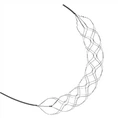

Cerebral aneurysm is a tumor-like protrusion that appears at the intersection of aorta or arteries. It is a clinically serious cerebrovascular disease. Its early symptoms are hidden. As the disease progresses, the patient may experience sudden tumor rupture and bleeding, which in turn leads to subarachnoid hemorrhage. Microcomputer life and health, should be treated in time. With the continuous development of medical technology in my country, cerebral aneurysms are increasingly focused on the use of intravascular microcatheter interventional treatment. Through this article, understand the effect of intravascular microcatheter interventional treatment of cerebral aneurysms.
The operation method of intravascular microcatheter interventional treatment is: the patient takes the supine position, general anesthesia, heparinized anticoagulation, repeatedly flushes the catheter with saline, and uses femoral artery catheterization for whole brain angiography to determine the specific location and size of the cerebral aneurysm, accurately measure the width and diameter of the aneurysm neck, and slowly send the plastic microcatheter into the affected internal carotid artery and into the aneurysm cavity.
Intravascular microcatheter interventional treatment has the following advantages.
1. It can accurately measure the width and diameter of the aneurysm neck, and perform the operation on the premise of determining the specific location and size of the aneurysm, which helps to avoid brain damage, reduce surgical errors, and thus reduce complications.
2. With the help of catheters and guide wires, the embolic material is sent into the aneurysm cavity to achieve the surgical operation of closing the aneurysm. The coil is used for embolization, which can completely block the aneurysm and improve the treatment effect.
3. Vascular microcatheter interventional treatment has minimally invasive characteristics. It pushes embolic materials to the patient's peripheral artery to the aneurysm lesion, closes and isolates the lesion from the blood flow, has a small surgical incision, and has less intraoperative bleeding. At the same time, it can effectively reduce the abnormal secretion of serum indicators and recover quickly after surgery.
In summary, vascular microcatheter interventional treatment of cerebral aneurysms has a good effect, which can effectively prevent subarachnoid hemorrhage, shorten the operation time, improve serum indicators, reduce the incidence of complications, and promote the recovery of patients.