



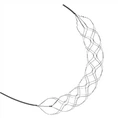
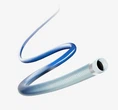
Mechanical thrombectomy is an effective method for the treatment of acute ischemic stroke, including direct aspiration, Stent Retrieval, or a combination of both. Direct aspiration can be performed using a variety of catheters of different sizes depending on the diameter of the occluded vessel.
Some scholars have divided the angiographic results into three types: "complete recanalization", "partial recanalization" (in the case of thrombus migration downstream of the branch or distal thrombus in the area supplied by the recanalized arterial segment) and "no recanalization". At the same time, the arterial diameter was measured independently before surgery, and the inner diameter of the distal end of the aspiration catheter (DAC) was collected. The inner diameter of the catheter was divided by the arterial diameter (AD) . Through testing and research, it was found that the ratio of the inner diameter of the catheter to the inner diameter of the artery was significantly different between the three recanalization categories, among which the "complete recanalization group" had the highest ratio and the "no recanalization" group had the lowest ratio. Therefore, it was confirmed that the larger diameter of the aspiration catheter relative to the arterial diameter was associated with an increase in the success of recanalization. At the same time, it was reported that larger aspiration catheters had better recanalization effects than smaller catheters, especially catheters with a diameter of >0.040 inches in the MCA and 0.064 inches in the ICA. The relationship between catheter size and recanalization success rate may be because the larger diameter catheter has a greater suction force when the aspiration catheter captures the thrombus, thereby reducing the possibility of the thrombus not being aspirated and escaping.
Since the diameters of the patient's blood vessels and catheters are not very different, this may be difficult to achieve in practice, and various sizes of aspiration catheters are required. The following are different options given by scholars. The optimal diameter of the distal aspiration catheter is calculated according to the ratio of the inner diameter 0.7–0.8 and the outer diameter 0.8–1.0, and the results shown are for different blood vessel diameters.

In summary, the ratio of the inner diameter of the aspiration catheter to the arterial diameter measured by angiography in the range of 0.7-0.8 is most correlated with complete recanalization. The surgeon can choose a more appropriate aspiration catheter under guidance to improve the success rate of recanalization.