



I. New technology for intracranial aneurysm embolization.
Intravascular embolization has become one of the main methods for treating intracranial aneurysms and has achieved good results. However, when the branch artery is very closely related to the aneurysm, or even originates from the neck or side wall of the aneurysm, it is difficult to retain the branch artery during the embolization process. In response to the corresponding problem, a Chinese professor introduced a new technology. The specific operation is as follows:
1. First, a 3D coil slightly larger than the diameter of the aneurysm is selected to form a stable internal framework to support the side walls of the aneurysm and the walls of the branch arteries, so as to provide support for the subsequent coils filled in during the "basket formation" process.
2. After the initial "basket formation", due to the large number of unfilled gaps, most of the aneurysm space is still not embolized, so other small coils are then filled in. By adjusting the position of the microcatheter tube head and selecting coils of different properties and diameters, the coil distribution is adjusted to avoid the area where the branch arteries on the aneurysm wall are generated.
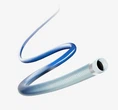
3. According to the type of aneurysm neck, a suitable balloon or stent can be selected to form a more stable framework structure or protect other branches. Simple embolization or stent-assisted embolization is used according to the situation.
II. New technology for stent-assisted embolization of aneurysms.
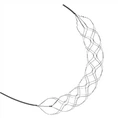
Stent placement in the parent artery to assist in embolization of aneurysms can meet most clinical needs. However, when there are branch vessels from the neck of the aneurysm, the branch vessels are thin or are at a sharp angle, making it difficult to superselect, and other blood vessels are missing and there is no path to reach them, this new technology can place a part of the distal end of the headless stent into the aneurysm to play a role in lifting and squeezing. At the same time, the main body of the stent is still in the main parent artery, and the blood flow is positive, avoiding the disadvantage of the stent directing the blood flow into the aneurysm and high recurrence in the later stage.
III. New technology for stent-assisted embolization of posterior communicating artery aneurysms
The occurrence of posterior communicating artery aneurysms is related to the embryonic posterior cerebral artery (fPCA), and its incidence is proportional to the diameter of the fPCA. Posterior communicating artery aneurysms with fPCA are mostly wide-necked aneurysms. Compared with aneurysms in other parts, the occlusion rate after interventional treatment is lower and the recurrence rate is higher. For the treatment of this type of aneurysm, a Chinese professor introduced a new technology. The specific operation is as follows:
1. The stent microcatheter superselects the ipsilateral fPCA under the guidance of the microguidewire;
2. Accurately position and semi-release the stent to the neck of the aneurysm, with the unreleased part of the stent in the microcatheter being about 3mm;
3. The shaped embolization microcatheter head is sent into the aneurysm cavity with the microguidewire, and the 3D spring coil is filled into the frame;
4. The stent microcatheter is pushed to completely release the proximal end of the stent in the internal carotid artery beyond the opening of the pCoA;
5. Continue to fill the appropriate detachable spring coil through the embolization microcatheter until the aneurysm is no longer visible during angiography;
6. Withdraw the embolization microcatheter.
In addition, when the angle between the embryonic posterior cerebral artery and the main blood vessel is too small, or the posterior cerebral artery is tortuous, causing the microguidewire microcatheter to be unable to pass through the posterior communicating artery smoothly, the microcatheter looping technique can be used. When dealing with wide neck arteries, the distal microguidewire can superselect into the distal blood vessels, but it cannot provide good support. The microcatheter and microguidewire are prone to protrude into the aneurysm as a whole, so the intratumoral looping technique can be used for treatment.