



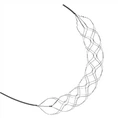
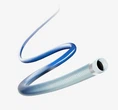
Stent thrombectomy and catheter aspiration thrombectomy are often used in the treatment of acute intracranial large vessel occlusion. However, stent thrombectomy has the disadvantages of thrombus fragmentation, vascular endothelial damage and partial inability to recanalize during treatment. Catheter aspiration thrombectomy has a lower ability to open blood vessels during treatment than stent thrombectomy, but it can reduce the risk of thrombus escape to distant places and cause vascular wall damage. Some scholars have studied stent thrombectomy and intermediate catheter combined with stent thrombectomy.
Stent thrombectomy, the specific method is to puncture the femoral artery and perform angiography to clarify the blood vessels, place the guide catheter in the blood vessel closest to the lesion under the guidance of the guidewire, and insert the intermediate catheter, micro-guidewire and micro-catheter, place the stent in the occluded area, and use the micro-catheter to semi-recover the stent and then remove the thrombus after leaving it for 5 minutes.
Intermediate catheter aspiration combined with stent thrombectomy, the specific method is to use the stent to deliver the intermediate catheter to the proximal end of the thrombus on the basis of simple stent thrombectomy, close the intermediate catheter for flushing, use a syringe to maintain the blood return aspiration state and slowly move the aspiration catheter forward.
Through clinical data, it is found that compared stent thrombectomy with intermediate catheter aspiration combined with stent thrombectomy, intermediate catheter aspiration combined with stent thrombectomy has the following advantages:
1. The intermediate catheter aspiration combined with stent thrombectomy has a high rate of vascular recanalization in the treatment of acute cerebral infarction, reducing the risk of cerebral hemorrhage;
2. The intermediate catheter shortens the operation time, reduces the number of thrombectomy operations, and avoids the damage to the vascular endothelium caused by long-term and repeated thrombectomy operations;
3. The risk of cerebral hemorrhage caused by prolonged vascular recanalization time is reduced, and the incidence of adverse events such as cerebral hemorrhage and thrombus escape in patients is reduced.
In summary, the clinical application of intermediate catheter aspiration combined with stent thrombectomy for the treatment of acute cerebral infarction effectively improves the success rate of vascular recanalization, shortens the operation time, is beneficial to prognosis, and has good safety.