



Cerebral stroke, commonly known as "stroke", is an acute cerebrovascular disease caused by sudden rupture of brain blood vessels causing bleeding (cerebral hemorrhage) or blood vessel blockage causing blood to not flow into the brain causing ischemia (cerebral infarction), resulting in brain tissue damage, disability and even life-threatening. Stroke has the "five high" characteristics of high incidence, high recurrence rate, high disability rate, high mortality rate and high economic burden, and is one of the major diseases threatening the health of our country's people.
Stroke remains the leading cause of morbidity and mortality worldwide. The advent of endovascular treatment has revolutionized the treatment and outcomes of acute stroke. Multiple randomized trials have confirmed the beneficial effects of endovascular thrombectomy on large vessel occlusive stroke and made it the main treatment method.
In the short period of time since mechanical thrombectomy was provided for stroke treatment, the devices for endovascular thrombectomy have evolved significantly. Stent thrombectomy (stent retriever) has become the main device for stroke treatment by neurointerventional physicians worldwide.
Structure and composition
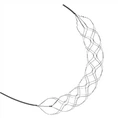
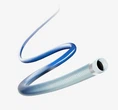
Intracranial thrombectomy stent retriever is a device used to treat cerebrovascular disease, mainly for the treatment of cerebral vascular embolism. Its main feature is that it can be implanted through intravascular interventional surgery, avoiding the trauma of traditional craniotomy, reducing surgical risks and recovery time. Intracranial thrombectomy stent retrievals are usually made of metal mesh, which has good flexibility and elasticity and can adapt to blood vessels of different shapes and sizes. Its composition mainly includes the stent body and the guide wire. The stent retriever body is used to block the blood vessel of the embolus, and the guide wire is used to guide the stent into the blood vessel.
According to different designs and materials, intracranial thrombectomy stent retriever can be divided into different types. Common types include detachable stents and non-detachable stents. Removable stents can be adjusted and removed after implantation, which is suitable for situations that require multiple operations. Non-detachable stents are one-time implants and are suitable for simpler embolism situations.
In short, intracranial thrombectomy stents are a neurological and cardiovascular surgical device used to treat cerebral vascular embolism. Its feature is that it is implanted through intravascular interventional surgery, which reduces surgical risks and recovery time. According to different designs and materials, intracranial thrombectomy stents can be divided into two types: detachable and non-detachable.
The birth and development of stent thrombectomy devices
The term Stent Retriever is a very appropriate summary of the epoch-making neurointerventional device, the stent thrombectomy device. The term stent originated from the British dentist Charles Thomas Stent (1807-1885). In 1916, Dutch orthopedic surgeon Johannes Fredericus Esser (1877-1946) used the material invented by Stent when performing facial reconstruction surgery on soldiers in World War I. In Chinese, the word Stent is translated as stent. The commonly used word in interventional radiology is stenting, which means putting in a stent. The first person to use stents in blood vessels to support blood vessels may be the team of Julio Palmaz, an Argentine radiologist in the United States.
The cerebrovascular thrombectomy device was born in the fall of 1995. Dr. Pierre Gobin and J.P Wensel, scholars from UCLA, used urokinase to dissolve blood vessels in patients with early stroke and middle cerebral artery thrombosis, but the blood vessels failed to open. Frustrated, the two scholars tried to develop a device to remove blood clots and reduce the risk of bleeding. A spiral-like device was initially designed and made of nickel-titanium (Nitinol) memory alloy. After continuous improvement and improvement, clinical trials were launched in May 2001 after two years. The first two stroke patients used stents to achieve TIMI grade 3 recanalization. Although the thrombectomy device did not obtain high-level evidence of clinical effectiveness, it inspired the confidence of later researchers to conduct further research. With the continuous improvement of the research and development level of nickel-titanium alloy stents and the continuous expansion of application fields, the "Stent Retriever" accidentally boarded the stage of stroke treatment.
Basic principles of stent retriever thrombectomy
The principle of modern stent retriever thrombectomy is that under the guidance of imaging technology, the doctor passes a guide wire through the thrombus, inserts a microcatheter, inserts the thrombectomy stent retrieval, and then withdraws the catheter. The memory alloy stent will automatically release and open, and the stent ribs (Strut) will be combined with the thrombus, and the thrombus will be embedded in the mesh structure of the stent. The thrombus and the stent are taken out of the body together, and the thrombus removal operation is completed.