



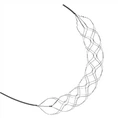

Stroke is a leading cause of death and disability worldwide, and thrombectomy has become a standard treatment option for acute ischemic stroke caused by large vessel occlusion. The use of stent retrievers has significantly improved the outcomes of thrombectomy procedures, but there are still limitations and challenges associated with this method. One critical factor is the size and shape of the occluded vessel, which can make it difficult to navigate the stent retriever to the clot. To overcome this, the microcatheter technique has emerged as a valuable tool for stent retriever thrombectomy.
The microcatheter technique involves the use of a small catheter to navigate through tortuous vessels and reach the site of the clot. The catheter is then used to deliver the stent retriever with precision, ensuring optimal positioning and retrieval of the clot. By using the microcatheter technique, the interventional neuroradiologist can overcome the limitations of conventional stent retriever technique, and successfully retrieve even the most distal clots.
One of the significant advantages of the micro catheter technique is its ability to reach clots located in small distal vessels, such as the M2 and M3 segments of the middle cerebral artery. These vessels are often too small or tortuous to navigate with a stent retriever alone, but with the use of a microcatheter, the interventional neuroradiologist can access the clot with greater precision and efficacy. By using a microcatheter, the stent retriever can be delivered to the precise location of the clot, ensuring complete retrieval and a better clinical outcome for the patient.
Another advantage of the microcatheter technique is its ability to reduce the risk of distal embolization during thrombectomy. When using a stent retriever alone, there is a risk that parts of the clot can break off and travel downstream, potentially causing further damage to the brain. By using a microcatheter to navigate past the clot and deliver the stent retriever, the interventional neuroradiologist can reduce the risk of distal embolization, achieving better outcomes for the patient.
The micro catheter technique is not without its challenges, though. One of the most significant obstacles is the need for expertise and experience. The use of a microcatheter requires advanced training and skill, with a thorough understanding of the anatomy and pathophysiology of the cerebral vessels. Additionally, the small size of the catheter, combined with the complexity of some occlusions, can make it difficult to navigate and deliver the stent retriever precisely.
The microcatheter technique has become a valuable tool for stent retriever thrombectomy. By using a small catheter to navigate through tortuous vessels, interventional neuroradiologists can reach the distal clots and retrieve them with precise efficacy. The microcatheter technique has revolutionized thrombectomy, providing a new level of precision, safety, and effectiveness. With continued advances and improvements in catheter technology and interventional neuroradiology, the prospects for stroke patients are brighter than ever before.