


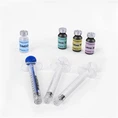
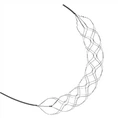
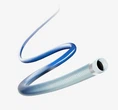
At present, there are four main methods of coil detachment: thermal melting detachment, electrolysis detachment, mechanical detachment, and water detachment, among which electrolytic detachment is the detachment method with the longest development time. However, since most of the connecting wires used for electrolytic detachment are made of stainless steel, it takes a long time for complete detachment, the probability of problems such as inability to detach is high, and the detachment efficiency and stability are low, which still cannot realize the ideal detachment effect of stability and high efficiency. So other detachment methods were developed later.
1. Electrolytic detachable coils generally use the positive and negative poles of the releaser to enter the blood of the human body through metal rods or metal needles, and after electrification, the metal wires used to connect the coils and positive metal rods are electrolyzed in the blood become metal ions, and then the metal wire breaks to achieve the release effect. The disadvantage of this method is that the welded part will be uneven after the electric welding cools down, and it is easy to generate a high voltage, which will cause the time is not easy control when the coil is released from the microcatheter.
2. Thermal melting detachable coil by fusing the connection section between the push rod and the coil through the heating coil to realize the detachment effect of the coil. It generates heat through electricity, and when the heat reaches a certain level, the thermal fuse is blown to realize the release of the coil . This method requires the introduction of electric current, wires and electrodes, etc., and smoke will be generated when the heat is melted, which may cause a part damage in the human body.
3. Mechanical detachable coil achieves the release effect through the special mechanical structure and the operating device. The current mainstream method is the ferrule type. that is, through a movable connecting rod with a spherical end, the first end of which is connected to the coil. The detachment wire and the movable connecting rod are assembled and put into the delivery catheter together, and the release wire is withdrawn to realize the release of the coil.
4. Water detachable coil system consists of a high-pressure injector, a coil delivery tube and a bare platinum coil. The detachment of the coil is achieved by injecting solvent into the delivery pipeline to dissolve it. Different from electrolysis detachable coil, the main features are: when the coil is released in the aneurysm, it is always coiled along the aneurysm wall from outside to inside. The ring is soft, and it is shaped randomly in three dimensions when released, which can better conform to the shape of the aneurysm. This method has the problem of unstable release, and the injection of solvent is easy to increase the pressure of blood vessels, and if the amount of solvent injection is insufficient and cannot reach the position where the coil is released.