



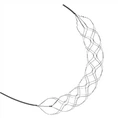
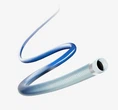
The term stent retriever summarizes the epoch-making neurointerventional device of thrombectomy stent. The term stent comes from the British dentist Charles Thomas Stent. In 1916, Dutch orthopedic surgeon Johannes Fredericus Esser used the material invented by Stent when performing facial reconstruction surgery on soldiers from World War I. In Chinese, the word stent translates as a bracket. The term commonly used in Interventional Radiology is stenting, which means putting in a stent. The first to use stents in blood vessels to support blood vessels may be the team of Argentinian radiologist Julio Palmaz in the United States. In 1985, they successfully experimented with the stainless steel expandable stent designed by themselves on the large arteries of dogs(including the common carotid artery). The article was published in "Radiology" with the title “Expandable Intraluminal Graft: A Preliminary Study. Work in Progress". Since then, stent has gradually been widely used in the field of endovascular treatment of aorta, coronary artery, lower extremity blood vessels and so on.
Advances in material science have provided a strong guarantee for the development of revascularization devices, and the wide application of medical nickel-titanium alloy stents has laid the foundation for the emergence of thrombectomy stents. The concept of memory alloy was proposed by Greninger and Moor-adina in the observational study of brass(composed of zinc and copper). Buehler of Naval Ordnance Laboratory(NOL) and his colleagues discovered nickel-titanium alloy in 1963 and named it Nitinol(Nickel titanium Naval Ordnance Laboratory).
Nickel-titanium shape memory alloy is an intermetallic compound formed by the interaction of equiatomic ratio titanium atoms and nickel atoms. It has excellent superelasticity and shape memory properties, good biocompatibility and corrosion resistance. The alloy can be deformed randomly. And it has good deformation ability with the body, moderate deformation resistance, high strength of the alloy, and significantly lower elastic modulus than other metals. These advantages make titanium-nickel alloy an ideal biomedical material and vascular stent material. In 1984, Cragg first reported the endovascular treatment of Nitinol stents. The nickel-titanium alloy laser-engraved stent is processed by using a nickel-titanium alloy hollow tube with a laser engraving machine. The stent units are integrated and processed through heat treatment expansion, passivation polishing and other post-processing processes. It has high processing precision and is suitable for mass production. It is a widely used process for the production of intracranial and peripheral self-expanding stents.
The cerebrovascular thrombus stent retriever sprouted in the autumn of 1995. American UCLA scholars Dr Pierre Gobin and J.P Wensel used urokinase for arterial thrombolysis in patients with early stroke middle cerebral artery thrombosis, but the blood vessels failed to open. The two scholars were frustrated and tried to develop a device to remove blood clots and reduce the risk of bleeding. A spiral-like device has been preliminarily designed and made of Nitinol memory alloy. After continuous improvement, the clinical trial was launched in May 2001, and the first 2 stroke patients obtained TIMI grade 3 recanalization with the stent. Although the thrombectomy device has not obtained high-level evidence of clinical effectiveness, it has encouraged the confidence of later researchers to carry out further research.
With the continuous improvement of the research and development level of nickel-titanium alloy stents and the continuous expansion of application fields, the stent retriever has entered the stage of stroke treatment by accident. The intracranial thrombectomy stent retriever is a self-expandable retrievable stent made of classic nickel-titanium alloy. The original design use is to assist in the embolization of wide-necked intracranial aneurysms. It was found that when the stent needs to be repositioned during use, the stent can be pulled directly without retrieving and releasing.
In March 3, 2008, a 67-year-old woman with acute ischemic stroke treated by the Hans Henkes team in Stuttgart, Germany, showed no clinical improvement within 30 minutes after intravenous thrombolysis, and subsequently decided to proceed with bridging therapy while starting endovascular therapy. No recanalization of the occluded vessel was seen after slowly withdrawing the thrombectomy brush(an early thrombus retriever). Considering the urgency of the situation and the fact that no other equipment was available, a stent was placed at the occluded vessel. After a few minutes, the stent retrieval was withdrawn slowly under continuous aspiration. Angiography showed complete recanalization of the occluded vessel, no surrounding embolism or vasospasm, but thrombus was found in the stent. This attempt with a stent retriever was a success! Matthew J Gounis published an article on in vitro research in 2008, showing the process of using a stent to remove a thrombus in an vitro model. The SWIFT study published in 2012 was a milestone. In 2015, the MR CLEAN study announced that stent thrombectomy was the cornerstone of evidence in large-scale multi-center clinical trials. Since then, a new era of stroke treatment has opened.