


In the fields of neurointerventional and peripheral vascular interventional diagnosis and treatment, vascular embolization technology has become a core method for treating vascular lesions such as arteriovenous malformations and highly vascularized tumors. Liquid embolization systems, with their advantages of precise penetration and controllable occlusion, are gradually becoming the mainstream choice in clinical treatment. With continuous breakthroughs in domestic medical technology, liquid embolization materials based on EVOH copolymers have undergone technological upgrades, bringing a new solution for minimally invasive treatment of vascular lesions.
The core value of liquid embolization systems lies in overcoming the limitations of traditional mechanical embolization agents, enabling them to penetrate deep into malformed vascular clusters and distal microvessels to achieve complete vascular occlusion. Compared with mechanical embolization materials such as coils, liquid embolization agents are delivered in fluid form, adaptable to complex vascular anatomy, especially targeting the nested structures of arteriovenous malformations, achieving a more thorough embolization effect and reducing the risk of postoperative recurrence. Currently, mainstream clinical liquid embolization agents use EVOH copolymers as the core component, combined with dimethyl sulfoxide (DMSO) solvent and contrast agents. This combination of biocompatibility and operational controllability makes it a preferred material for treating neurovascular and peripheral vascular diseases.
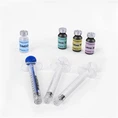
As a significant breakthrough in liquid embolization technology, the application of EVOH copolymer non-adhesion technology has completely solved the problems of traditional embolization agents' tendency to adhere to catheters and high operational risks. The next generation of products, represented by the LAVA liquid embolization system, relies on the latest EVOH copolymer technology to achieve non-adhesive delivery of the embolization agent. This avoids surgical complications such as catheter retention and allows for stable precipitation and solidification to form a durable vascular cast, ensuring the longevity of the embolization effect. Furthermore, to adapt to different clinical scenarios, the liquid embolization system features a graded viscosity design, ranging from low viscosity (12 cSt) to high viscosity (34 cSt), meeting the differentiated needs of distal microvascular embolization, conventional vascular disease treatment, and high-flow-rate vascular occlusion, making clinical operations more targeted.
Precise visualization and controllable delivery are another core advantage of liquid embolization systems. The addition of ultra-micronized tantalum powder significantly improves the visibility of the embolic agent under imaging, allowing doctors to monitor its flow and distribution in real time for precise targeted embolization. Enhanced fluid properties enable the embolic agent to penetrate deeper into the capillaries, and combined with a stable delivery method, gradually achieves complete vascular occlusion, significantly improving surgical success rates. In clinical applications, liquid embolization systems are widely used for the embolization treatment of intracranial arteriovenous malformations, peripheral vascular malformations, and highly vascularized tumors, becoming an important tool for minimally invasive interventional therapy.
With the popularization of interventional diagnostic and treatment technologies in China and the acceleration of domestic substitution, liquid embolization systems have ushered in new development opportunities. Clinical demands for precise, minimally invasive, and efficient treatment are driving the upgrading of embolization materials towards higher biocompatibility and superior operational performance. Domestically produced products, exemplified by the LAVA liquid embolization system, have achieved parity with international advanced technologies thanks to their core advantages such as full viscosity coverage, non-adhesive technology, and precise visualization. Furthermore, their product design, tailored to clinical needs, provides domestic interventional physicians with a cost-effective treatment option.
In the future, liquid embolization technology will continue to evolve towards greater precision, intelligence, and adaptability to complex lesions. Continued breakthroughs in domestic technology will further promote the widespread adoption of vascular embolization therapy, bringing new hope for minimally invasive treatment to more patients with vascular diseases and helping China's interventional medical industry enter a new stage of high-quality development.