



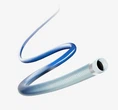
In the field of neurointerventional diagnosis and treatment, microcatheters, as core endovascular manipulation devices, serve as a "precision bridge" connecting clinicians with lesion sites and are key carriers for achieving minimally invasive treatments in peripheral, coronary, and neurovascular systems. NeuroSafe's Tranavi™ microcatheters, with their innovative structural design and clinically tailored performance advantages, have become an important choice in the field of neurointervention. This article will analyze the professional knowledge of this "precision vascular navigator" from the aspects of its core value and design principles.
I. The Core Role of Microcatheters: A "Precision Manipulation Carrier" for Interventional Diagnosis and Treatment
A microcatheter is a hollow tubular device with a slender outer diameter and excellent flexibility and maneuverability. It is primarily used in interventional diagnosis and treatment of the peripheral, coronary, and neurovascular systems. Its core function is to provide a precise delivery channel for various therapeutic and diagnostic instruments and drugs. In the field of neurointervention, the cerebral vascular anatomy is complex, with narrow, tortuous vessels and numerous bifurcations. The existence of microcatheters solves the problem of traditional methods failing to reach lesion sites-guided by a guidewire, it can smoothly pass through tortuous blood vessels, precisely delivering stents, embolization materials, and other therapeutic instruments to lesions such as aneurysms, vascular stenosis, and arteriovenous malformations. Simultaneously, it can deliver contrast agents to complete angiography, providing clear imaging evidence for diagnosis. It is a core support for the minimally invasive and precise nature of neurointervention.
The Tranavi™ microcatheters was developed based on this core need. They are designed specifically for clinicians to deliver designated therapeutic devices, embolization materials, and diagnostic contrast agents. They are adapted to the complex anatomy of neurovascular systems, achieving the clinical goals of "precise arrival, safe operation, and effective deployment".
II. Core Design Principles: Adapting to vascular anatomy, balancing performance and safety
The full clinical value of microcatheters depends on the balance of four core performance characteristics: flexibility, delivery capability, trackability, and safety. All of these stem from their underlying structural and manufacturing design. The innovative design of the Tranavi™ microcatheters precisely responds to the clinical needs of neurovascular intervention, and its core design highlights have become a typical reference for microcatheter design in the industry:
1. Non-invasive distal tip: Reducing the risk of vascular injury from the source. Neurovascular walls are thin and fragile; the design of the microcatheter tip directly determines the probability of vascular injury during advancement. Tranavi™ uses a tapered, rounded, non-invasive distal tip, abandoning sharp designs. When passing through vascular bends and bifurcation points, it effectively reduces scratching and irritation to the vascular intima, lowering the risk of complications such as vascular spasm and rupture. This is also a key manifestation of the "minimally invasive" core of neurointerventional devices-minimizing the trauma of device operation.
2. Anatomically Customized Flexible Region: Adapting to Vascular Course and Enhancing Tracking Capabilities Cerebral blood vessels exhibit natural curves and curvatures. Microcatheters with a single level of rigidity struggle to navigate these tortuous vessels and may even deform them due to excessive rigidity. Tranavi™ features a progressively flexible region designed based on anatomical research. By employing a gradient of rigidity across different segments of the catheter, maintaining a certain level of rigidity at the proximal end to ensure effective force transmission, and providing greater flexibility at the distal end, it naturally conforms to the curvature of the blood vessel. This significantly improves catheter tracking capabilities, allowing physicians to more easily guide the catheter to the target lesion site while reducing traction on the blood vessel caused by excessive catheter rigidity.
3. Hybrid Coil and Braid Structure: Balancing Flexibility and Manipulation Control The flexibility and manipulation of microcatheters often present a trade-off: excessive flexibility leads to insufficient pushing force, making it difficult for the catheter to reach distal vessels; excessive rigidity sacrifices flexibility, increasing the risk of vascular injury. Tranavi™ innovatively employs a hybrid structure of coil and braid, integrating these technologies to give the catheter both excellent flexibility to adapt to complex and tortuous vascular environments, and outstanding manipulation and kink resistance. This ensures effective transmission of pushing force and torque, allowing physicians to precisely control the catheter's trajectory during operation, achieving a performance balance of "flexible yet not mushy, rigid yet not brittle."
4. Molded Distal Tip: Adapting to Complex Bifurcations and Enhancing Vessel Selection Precision Neurovascular structures exhibit numerous bifurcation structures, and the angles of vessels vary significantly across different lesion sites. A fixed-shape tip is insufficient for all clinical scenarios. Tranavi™'s malleable distal tip design allows physicians to personalize the catheter tip to precisely fit the angle of the target vessel, enabling better vessel selection at vessel bifurcation points. It also improves the catheter's passage through narrow and tortuous vessels, significantly enhancing the accuracy of device deployment.
III. Clinical Application Scenarios: Covering Multiple Neurointerventional Diagnostic and Treatment Needs
1. Angiography: Precise delivery of contrast agents for clear lesion visualization. In cerebral angiography, microcatheters can reach the target vessel segment under guidewire guidance, precisely delivering contrast agents and achieving clear visualization of diseased vessels. This provides accurate imaging evidence for the diagnosis of intracranial aneurysms, cerebral vascular stenosis, and cerebral vascular malformations. Compared to traditional angiography methods, microcatheters can achieve more precise local angiography, reduce contrast agent dosage, and lower the risk of contrast-induced nephropathy.
2. Aneurysm embolization: Precise delivery of embolic materials for minimally invasive closure. Intracranial aneurysms are a common disease treated with neurointerventions, and microcatheters are the core carrier for aneurysm embolization. The microcatheter precisely delivers embolic materials such as coils into the aneurysm cavity, achieving dense embolization of the aneurysm, blocking its blood supply, and preventing rupture and bleeding. Tranavi™'s malleable tip and precise tracking allow the microcatheter to smoothly enter the aneurysm neck, ensuring effective deployment of the embolic material.
3. Stent Placement for Vascular Stenosis: Stent Delivery and Restoration of Vascular Patency
For vascular stenosis diseases such as intracranial artery stenosis and carotid artery stenosis, the microcatheter can precisely deliver stents to the stenotic site, restoring vascular patency through stent expansion. Its hybrid structure provides excellent delivery capability, ensuring smooth stent delivery in tortuous vessels, while the non-invasive tip reduces damage to the vessel during stent placement.
4. Treatment of Arteriovenous Malformations/Fistulas: Delivering Embolic Material to Block Abnormal Vascular Pathways
Diseases such as cerebral arteriovenous malformations and dural arteriovenous fistulas require blocking abnormal vascular pathways using embolic materials. Microcatheters can precisely reach the malformed vascular clusters or fistula sites to deliver embolic material, achieving minimally invasive treatment and effectively avoiding the significant trauma of craniotomy.