



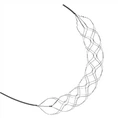
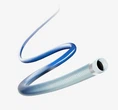
I.The core performance parameters of the distal access catheter have all undergone rigorous clinical validation to ensure that each indicator effectively addresses surgical pain points:
1. Ultimate Passability: Unimpeded Passage Through Complex Vessels
• The ultra-flexible distal segment and optimized catheter contour design improve tracking performance by 40% compared to traditional catheters. Even in vascular pathways with tortuosity >60°, the success rate of placement remains above 95%;
• The catheter body uses a medical-grade hydrophilic coating (fully covering the distal end), significantly reducing the coefficient of friction upon contact with blood and decreasing pushing resistance by 50%. Surgeons can easily control the catheter to advance segment by segment, avoiding vascular damage caused by excessive resistance.
2. Stable Support: A Reliable Foundation for Precise Operations
• The coil + braided composite structure increases proximal support by 60% compared to ordinary braided catheters. During procedures such as thrombectomy stent release and coil packing, it firmly secures the catheter, preventing surgical failure due to instrument displacement.
• Excellent anti-kinking performance ensures the lumen remains patent even in repeatedly tortuous vascular pathways, eliminating the risk of collapse or blockage and ensuring continuous contrast agent and drug delivery.
3. Safety Protection: A Safety Barrier for Neurointerventions
• Biocompatibility: Non-cytotoxic and non-sensitizing; the smooth, non-porous catheter surface reduces platelet adsorption and lowers the risk of thrombosis.
• High Pressure Tolerance: The sealed connector withstands the high-pressure injection requirements of neurointerventions, eliminating the risk of contrast agent leakage or connector detachment. The single-use design prevents cross-infection.
II. Distal access catheters, with their technological advantages, have become core access devices for various neurointerventional surgeries, with wide clinical applications:
1. Mechanical thrombectomy for acute ischemic stroke
• As the "core access" for thrombectomy, the 8F series extra-large lumen models allow for direct thrombus aspiration. When used in conjunction with a thrombectomy stent, the thrombus clearance rate is increased to over 90%;
• Adapted to "combined aspiration and thrombectomy techniques," they can quickly establish a stable access, shorten vascular recanalization time (an average of 20 minutes shorter than traditional catheters), reduce cerebral ischemia and hypoxia damage, and improve patient prognosis;
• Transradial access models (6F-R series) provide a new option for patients who cannot tolerate the femoral access, broadening the applicable population for thrombectomy.
2. Intracranial Aneurysm Embolization
• 5F and 6F series catheters can precisely reach anterior communicating artery aneurysms, posterior communicating artery aneurysms, and basilar artery apex aneurysms, providing a stable delivery channel for coils and flow diverters (FDs);
• The gradient support design keeps the catheter in place during embolization, preventing coil displacement or aneurysm rupture, making it particularly suitable for precise embolization of wide-necked aneurysms and small aneurysms (diameter <3mm);
• Compatible with balloon guiding catheters, which can assist in balloon dilation during embolization, improving embolization compactness.
3. Interventional Treatment of Cerebral Vascular Stenosis/Anomalous Vessels
• Stent placement for intracranial arterial stenosis (such as middle cerebral artery stenosis and vertebral artery stenosis), providing pathway support for balloon dilation catheters and intracranial stents to ensure precise stent placement;
• Assisting in interventional embolization of cerebral vascular malformations (AVMs), allowing direct access to the feeding arteries of the malformed vascular cluster, providing a stable channel for embolic material delivery, and reducing the risk of misembolization in normal vessels;
• The enhanced support of the 6F-S series effectively resists the elastic recoil force of stenotic vessels, improving stent placement success rates.
4. Other Neurointerventional Procedures
• Intracranial Angiography: Provides a low-resistance pathway for contrast agent infusion, clearly displays the intracranial vascular anatomy, and helps physicians determine the location, extent, and morphology of lesions;
• Drug Infusion: Enables precise infusion of thrombolytic drugs (such as tenecteplase) and vasodilators, directly targeting the lesion site and improving drug efficacy;
• Perforator Artery Lesion Intervention: The 5F series of thin-diameter devices is suitable for minimally invasive treatment of perforator arteries (such as lenticulostriate arteries), reducing damage to surrounding nerve tissue.