


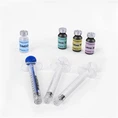
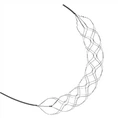
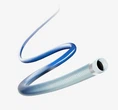
Interventional therapies include stent thrombectomy, aspiration thrombectomy, and a combination of stent + aspiration. Stent thrombectomy mainly refers to the use of image fluoroscopy-guided positioning, and the introduction of a stent through a microcatheter through the blood vessel to intercept the thrombus clot in the blood and restore vascular patency, it can be used within 24 hours after the onset of symptoms. Direct aspiration thrombectomy is guided to the surface of the clot through a large-caliber suction catheter, and the thrombus is removed by strong negative pressure aspiration. The two can be used independently and are not completely interchangeable. The combined thrombectomy effect is better. Currently, the stent + aspiration combination thrombectomy is also more commonly used in clinical practice.
Stent thrombectomy
The stent thrombectomy device travels along the lower limb artery through the arterial channel in the body to reach the intracranial artery. The thrombectomy device at the front of the catheter actively "captures" the thrombus blocking the blood vessel and restores blood vessel patency. It is suitable for patients with symptoms within 6 hours of onset and patients who receive intravenous thrombolysis within 4.5 hours of onset.
Direct aspiration and thrombus removal
Through the femoral artery access, a large inner diameter catheter is pushed to the proximal end of the blocked cerebral artery with the help of a guide wire, and an external aspiration pump is used to automatically aspiration or a syringe is used to manually operate, forming sufficient negative pressure and aspiration force in the catheter to remove the thrombus. It is suitable for patients with anterior circulation AIS who show a mismatch between cerebral blood volume and blood flow on CTP, except for patients with posterior circulation AIS who are found to have extensive infarction of more than half of the brainstem area on any axial level of the head CT and cannot obtain the expected benefits.
Combined thrombectomy
Through contact aspiration, maintain aspiration negative pressure, pull the stent and thrombus into the middle catheter together. When the stent pulls the thrombus to the Y-type connecting valve, the middle catheter quickly returns blood under negative pressure aspiration, thereby achieving blood vessel recanalization. It is suitable for elderly patients with large vessel occlusion within 6-8 hours.
According to the above introduction, there are three interventional treatment options for acute ischemic stroke. The best interventional thrombectomy method can be used for treatment based on the patient's condition and other reasons.