



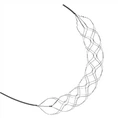

Cerebral infarction is a common brain disease in clinical practice, with the characteristics of high incidence and poor prognosis, which poses a huge threat to the patient's life safety. For patients with cerebral infarction, active thrombolytic therapy is often given in the clinic. At present, with the continuous advancement of medical technology, stent retriever technology guided by digital subtraction angiography (DSA) has been widely used in clinical practice, and has gradually realized minimally invasive treatment for patients with acute cerebral infarction.
The main method of DSA-guided stent retriever is to puncture the inguinal artery, insert the arterial sheath into the blood vessel next to the lesion, then use angiography to observe the location of the thrombus, and insert the DSA vascular microcatheter into the distal end of the thrombus under the guidance of a guidewire. After the thrombus is located and fixed, the stent is inserted, and the microcatheter is withdrawn to unfold the stent. After the stent clamps the thrombus, the stent is withdrawn under negative pressure to remove the thrombus. After confirming that the blood vessel is unblocked, the stent and arterial sheath are withdrawn, and the puncture point is sutured with pressure.
Compared with traditional thrombolytic therapy, DSA-guided stent retriever has the following significant advantages.
1.DSA-guided stent retriever can avoid damage to other nerves and blood vessels in the skull. After the catheter and stent are placed under the guidance of the guidewire, the thrombus can be directly removed by the stent. This operation can effectively protect the patient's vascular endothelial function while reducing the risk of thrombus detachment or transfer, and can better restore the blood supply of the diseased blood vessels and promote the recovery of the corresponding brain tissue function.
2.DSA-guided stent retriever uses local administration, which can effectively reduce the dose of systemic thrombolytic drugs and help reduce the risk of bleeding caused by systemic administration.
3.DSA-guided stent retriever can effectively open vascular occlusion and stenosis in patients with cerebral infarction, which can significantly improve the clinical efficacy of patients and effectively reduce the risk of long-term stroke recurrence in patients.
In short, DSA-guided stent retriever can effectively improve the cranial nerve function of patients with cerebral infarction, and has a positive significance for promoting the recovery of cerebral hemodynamics and vascular endothelial function, with a good prognosis.