



Early treatment of acute ischemic stroke mainly relies on intravenous thrombolysis, but due to the narrow time window and limited effect on recanalization of large vessel occlusion, the treatment effect is often poor. With the development of interventional technology, mechanical thrombectomy has gradually emerged. Intracranial thrombectomy stent is an important breakthrough.
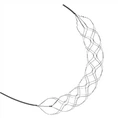
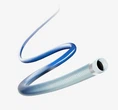
The intracranial thrombectomy stent is based on the self-expanding design concept. When in use, the folded stent is delivered to the intracranial thrombus site through a microcatheter. After reaching the target location, the stent automatically expands and opens in the blood vessel, and its mesh structure can fit tightly with the thrombus. After a short wait, the stent and the thrombus are fully combined, and then the stent and the thrombus are slowly recovered together, thereby achieving blood vessel recanalization and restoring blood supply to the brain.
Thrombectomy stents are usually made of shape memory materials such as nickel-titanium alloy. Nickel-titanium alloy has excellent biocompatibility and can exist stably in the human body environment, reducing the occurrence of allergic and rejection reactions. At the same time, it has unique shape memory properties. It can be compressed into a smaller size at low temperatures for easy transportation, and can be restored to a pre-set shape at body temperature to ensure that the stent can be reliably opened in the blood vessel. In addition, the mesh size and shape of the stent are carefully designed. A reasonable mesh should be able to effectively capture thrombi and prevent thrombi from falling off, while ensuring the flexibility of the stent so that it can pass smoothly through tortuous intracranial blood vessels. Different thrombectomy stents have different characteristics in mesh design. Some stents have smaller meshes and are more capable of capturing small thrombi; others have larger meshes and are suitable for larger thrombi.
The thrombectomy stent has many advantages. Compared with traditional intravenous thrombolysis, the thrombectomy stent has a more accurate recanalization effect on large vessel occlusion, which can restore cerebral blood flow in more patients in a short time and reduce ischemic damage to brain tissue.