



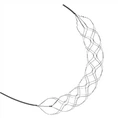
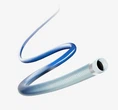
The complex morphology of intracranial aneurysms (wide neck, lobulated, small) is a core challenge for interventional neurosurgeons: traditional coils tend to "cross the aneurysm center," creating partitions that are difficult to pack in some areas, resulting in a 15-20% recurrence rate one year post-surgery. Our company's 3D optimized shape design eliminates the need for detachable coils, addressing this pain point at its root.
I. Why is "Avoiding Crossing the Center" Key?
Partial packing of aneurysms causes two fatal problems:
1. Some areas lack blood flow obstruction, forming "residual channels" and increasing the risk of rupture;
2. Uneven packing pressure may induce aneurysm rupture.
Our core optimizations to our detachable coils include:
1. Initial coil diameter of 3/4: The first 1.5 coils are 75% the diameter of conventional coils, anchoring near the neck of the aneurysm rather than directly occupying the center;
2. 3D three-dimensional basketing: Utilizing a "dynamic open-loop structure," there are no rigid connections between the rings, allowing them to naturally unfold according to the aneurysm's shape, perfectly conforming to complex shapes such as lobed or wide-necked aneurysms (neck width greater than or equal to 50% of the aneurysm body), avoiding cross-center partitioning.
II. Balance between flexibility and adaptability: Traditional 3D coils, in pursuit of "basketing stability," are excessively hardened, easily damaging the aneurysm wall; our detachable coils use platinum, tungsten alloy, and a hydrophilic coating, ensuring both frame strength (preventing collapse) and "vascular wall-like flexibility," easily adapting to small-diameter aneurysms without the risk of jamming or damage.