



In the past more than one hundred years, people have tried a large number of embolic materials for the treatment of vascular diseases or hypervascular diseases in the craniocervical region. In 1904, Dr. Dawbarn reported the embolization of malignant tumors of the head and neck using a mixed liquid material of white wax and petroleum jelly. In 1930, Brooks first embolized the carotid-cavernous sinus with muscle slices via the carotid artery.
Thirty years later, in 1960, Luessenhop and Spence reported the first case of AVI embolization within the body. They exposed the common carotid artery through surgery and used silicone rubber particles as the embolic material for embolization. Another milestone in interventional neuroradiology is that in the 1960s, Serbinenko first used a detachable balloon for treatment, and published their experience in the treatment of carotid-cavernous sinus fistula with a detachable balloon in 1974. At the same time, people began to use gelatin sponge as an embolization material, which was also used for the first time in the treatment of carotid cavernous sinus in 1964. Polyvinyl alcohol (PVA) began to be used as an embolization material in 1974, initially in the form of a sponge, and currently all PVA used for embolization is in the form of granules.
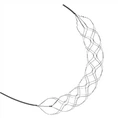
In 1976, Gianturco stainless steel elastic rings began to be used as interventional embolic materials, and were successfully used for transvenous embolization of DAW and carotid cavernous sinus fistula. After that, people have made a lot of improvements to the shape and material of the spring coil, among which the most revolutionary change is the recyclable electrolytic spring coil successfully developed by Guglielmi et al. in 1991. Afterwards, a large number of detachable coils came out one after another, which not only effectively promoted the interventional embolization treatment of intravascular aneurysms, but also were widely used in the interventional plunger treatment of cerebrovascular malformations. In addition, during the development of neurointervention, freeze-dried dura mater microspheres, autologous blood clots, sodium alginate microspheres, hydrogel microspheres, polysaccharide microspheres, stainless steel microspheres, diatrizoate amine gelatin microspheres, silk segments, white Ke powder, light apatite particles, etc. have been tried to be used as embolization materials.
The embolic materials mentioned above are all solid embolic materials. The advantage is that the injection is not limited by time. Embolization can still be performed when the microcatheter is not fully in place. The injection process is relatively simple and easy to control. The disadvantages mainly lie in two aspects . One is that the particles should neither be too small nor too small. If it is too large, it can only embolize the proximal end of the approach and cannot enter the occlusive lesion of the malformed blood vessel group. If it is too small, it will easily enter the venous system and cause pulmonary embolism or AVM embolism. Premature occlusion, so a larger diameter microcatheter is required for delivery and injection. For AVM, the transarterial embolization microcatheter cannot ideally enter or approach the malformation mass, and the embolic material can only block the feeding artery, which is only similar to ligation of the feeding artery and cannot be embolized To the deformity group. Second, the lesions treated with post-solid embolization materials are prone to recanalization. On the one hand, most of the solid embolization materials themselves or the thrombus formed after embolization are absorbed; The patency of the blood vessels and supplies the vascular malformation. Based on the above reasons, most solid embolic materials are only used for preoperative embolization of cerebrovascular malformations.
An ideal embolic material should be effective, controllable, and safe. Specifically, it should have the following characteristics: 1) Visibility; 2) Sufficient fluidity, and can be injected through the smallest caliber microcatheter; 3) has a certain inflammatory reaction, which makes the embolized blood vessel structure permanently occluded; 4) It has no toxic and side effects on the surrounding normal tissues, including long-term carcinogenic effects; 5)It is easy to obtain and relatively cheap.
The liquid embolic material has wettability and can be embolized into the deformity mass, so it is most likely to have the characteristics of the ideal embolic material mentioned above. In the late 1970s, people began to gradually explore the application of liquid embolic materials in brain AVM embolism, and continuously developed new liquid embolic materials. Historically, liquid embolic materials mainly include two categories: vascular sclerosing agents and vascular occlusive embolic materials.
Angiosclerotic agents mainly include ethanol and sodium tetradecylsulfonate, which are mainly used for direct injection treatment of superficial venous malformations, which can destroy endothelial cells, promote thrombus formation, and make the lesion atrophy. In 1997, Yakes first published a study on the embolization of intracranial cerebrovascular malformations with pure ethanol. Among the 17 treated cases, an average of 13 months of angiography found that 7 patients were cured only by pure ethanol injection. However, the risks of ethanol injection limit its advancement citation. In the case reported by Yakes, 8 patients had complications, although most of them were transient. The side effects of ethanol mainly come from its direct tissue responsibility, which can cause skin ulceration, mucosal necrosis and permanent nerve damage. When used for intracranial AVM embolization, it will significantly aggravate the edema of the brain tissue around the lesion, causing transient or permanent damage. Sexual neurological deficits. In addition, massive injections of ethanol can lead to cardiovascular failure. Due to safety issues, although the occlusion rate of AMI in this study was much higher than that of other embolic materials at the same time, the embolization of vascular sclerotic agents such as ethanol has not been widely used.
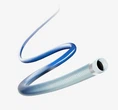
In 1975, Sano reported the use of silicone polymers for embolization of intracranial AVMs, which was an earlier report of vascular occlusion-like liquid embolization materials. Later, Berenstein used a mixture of low-viscosity silicone copolymer and large powder for embolization, combined with the application of a double-lumen balloon, which could further allow the embolization material to enter the distal small blood vessel. It also makes the liquid embolic material somewhat controllable. Since the 1970s, cyanoacrylate embolic materials represented by n-Butyl cyanoacrylate (NBCA) have been used in the embolization of intracranial vascular malformations, gradually replacing the above-mentioned silicone copolymers. As the most important embolic material for cerebrovascular malformations, it has been used for decades. In the late 1990s, a United States company developed Onyx, a new type of liquid embolic material. Due to its good controllable properties, Onyx has gradually become a more widely used liquid embolic material. The Lava liquid embolic system produced from NeuoSafe is same as Onyx on clinical outcomes.
Compared with solid embolic materials, vaso-occlusive liquid embolic materials can be uniformly filled into target blood vessels, thereby reducing the possibility of vascular recanalization and obtaining permanent embolization. On the other hand, liquid embolism may be directly injected into the malformation mass to achieve the purpose of truly embolizing the lesion and curing the lesion. Currently, liquid embolic materials have replaced solid embolic materials as the preferred material for embolization of cerebrovascular malformations. Solid embolic materials are used as supplementary materials in rare cases. According to their characteristics, vaso-occlusive liquid embolic materials can be divided into two types, adhesive liquid embolic materials and non-adhesive liquid embolic materials. The Lava liquid embolic system produced from NeuoSafe is non-adhesive liquid embolic materials.