



Neurointerventional aspiration catheters, a crucial tool in neurointerventional treatment, hold numerous scientific mysteries. Let's delve deeper.
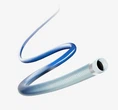
First, the material used in the manufacture of aspiration catheters is crucial. Currently, commonly used materials include polymers such as polytetrafluoroethylene and polyurethane. These materials offer excellent flexibility and biocompatibility. Flexibility enables the aspiration catheter to navigate freely through the complex and tortuous cerebral vessels without causing excessive damage to the vessel walls. Biocompatibility, on the other hand, ensures that the body does not develop a strong immune response to the catheter, reducing the risk of complications such as infection.
The diameter and length of the aspiration catheter were carefully considered during design. The catheter needed to be narrow enough to pass smoothly through narrowed blood vessels, yet maintain a sufficient internal diameter to aspirate thrombi. Different aspiration catheter lengths are designed for different vascular locations and lesions, allowing physicians to select the appropriate length based on the patient's specific condition.
The working principle of the aspiration catheter is based on the negative pressure principle in fluid mechanics. When a aspiration pump or manual suction device generates negative pressure, the pressure inside the catheter is lower than the pressure inside the blood vessel, and the thrombus is sucked into the catheter due to the pressure difference. In actual neurointerventional surgery, the use of the aspiration catheter requires the doctor to possess superb skills and extensive experience. The doctor should reasonably select the aspiration method and force based on factors such as the size and texture of the thrombus and the morphology of the blood vessel. If the suction force is too strong, it may cause the blood vessel to rupture; if the suction force is too weak, the thrombus may not be effectively removed. Therefore, the doctor needs to closely observe the operation during the operation and adjust the operation according to the actual situation.
While a neurovascular aspiration catheter is a powerful treatment tool, it is not suitable for all patients with cerebrovascular disease. In some special cases, such as those with a hard thrombus or severe vascular stenosis or malformation, other treatments, such as stent retrievers and thrombolytic drugs, may be needed to achieve optimal results.
With the continuous deepening of research on cerebrovascular diseases and continuous innovation in technology, neurointerventional aspiration catheters will continue to be improved and optimized to provide safer and more effective solutions for the treatment of cerebrovascular diseases.