



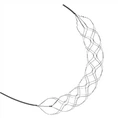
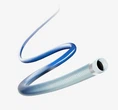
The most important technical characteristics of the aspiration catheter include the ability to reach the position, the inner diameter of the catheter, the stability of the lumen, and the compatibility with the interventional consumables.
In 2018, a study by Ali and other researchers found that catheters with larger inner diameters have a stronger aspiration effect, which can shorten the operation time and achieve a higher rate of vascular recanalization. The study by and other researchers in 2021 also concluded that large diameter catheters have better performance and can achieve better surgical results. Therefore, the design of the catheter pursues a larger internal diameter while pursuing better catheter performance. From the catheter with an inner diameter of only 0.026 inches released by an America company in 2008, it has developed to a catheter with an inner diameter of 0.072 inches and a catheter with an inner diameter of 0.074 inches.
Likewise the structure and material of the catheter is also linked to the aspiration effect. In terms of internal structure design, some catheters adopt a "segment-free reinforcement" design to make them have better proximal push performance. Some catheters use a double-layer structure with coils and braided inside to make the catheter more stable and less likely to deform during strong aspiration. With the continuous improvement of nickel-titanium alloy pipe processing technology, the wall thickness of the metal reinforced structure will be further reduced, making it possible to manufacture large diameter and strong control catheters. In terms of the material of the catheter inner lumen, some use a full-range PTFE coating, and some use TPE coating at the distal end because of the double-layer structure, which makes the thrombectomy stent pull back more smoothly and the lumen is more stable, thus pursuing better aspiration effect, catheter stability and clinical safety to ensure the success of the operation.
In terms of compatibility and model selection, some manufacturers have different lengths of 132cm and 138cm to suit different types of surgery. In order to adapt to different degrees of tortuosity and the high incidence of intracranial arteriosclerosis in China, some manufacturers have introduced more models of aspiration thrombectomy devices such as 115, 120, and 140 cm, which can adapt to complex tortuous blood vessel and meet the needs of angioplasty which is compatible balloon. Endovascular treatment for M1 occlusion of the middle cerebral artery and internal carotid artery occlusion has achieved remarkable results. However, for medium vessels represented by M2, endovascular treatment is still controversial. Small-bore aspiration may provide support for the expansion of indications. At the same time, the innovative design of catheters is still progressing. Catheters that are more consistent with the anatomical structure of the cerebrovascular structure and the principles of fluid mechanics are emerging, and the compatibility is constantly improving. The thrombus aspiration technology will surely be safer and more efficient.