



What is Solumbra Technique?
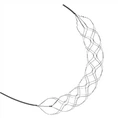
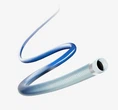
The essential difference between the switching strategy and the Solumbra technique is as follows. Switching itself is a strategy that involves using one device and then switching to another in some cases. However, Solumbra is a technique that involves using both methods simultaneously. First, a guiding catheter is introduced into the proximal portion of the target artery. Then, a 2.3 French or 2.5 French microcatheter with a 0.014 inch or 0.016 inch microguide wire inside is fed into the aspiration catheter. As a whole system is advanced into the guiding catheter. Importantly, as a part special technology of Solumbra , from this step the microcatheter is threaded through the thrombus. Then, advance the clot extraction device as close to the thrombus as possible. The thrombectomy stent is then released over the thrombus via a microcatheter. Next, the microcatheter is completely removed. After a standard waiting period of 3-5 minutes, connect the aspiration catheter to a 50 mL syringe for manual aspiration or suction pump, apply negative pressure to pull the thrombectomy stent retrieval into the aspiration catheter, and advance up into the thrombus simultaneously. If a thrombus becomes lodged between the the tip of revascularization Device and the aspiration catheter, carefully withdraw the system as a whole with continuous aspiration while manually aspirating through the guide catheter.
The Solumbra technology could offer several potential synergies which combines the use of a thrombectomy stent and a aspiration catheter. Local aspiration of the thrombus may facilitate clapping of the thrombus within the stent. Control of blood flow in the affected vessel area can also reduce the incidence of thrombus fragmentation and distal embolism. This was observed in 7.9% of cases in the SWIFT and TREVO trials and was as high as 11% in subsequent registries. Withdrawing the microcatheter from the clot extraction device leaves a greater cross-sectional surface area for aspiration of the thrombus, thereby greatly increasing the amount of aspirating that can be applied when retrieving the thrombus stent retrieval.
There have been many case series and clinical studies related to the Solumbra technique. The first case report technical notes can date back to 2013. In this report, the authors describe a technique for delivering a stent through a aspiration catheter using a 6-French triaxial system to provide intracranial aspiration in the vicinity of the stent. Therefore, negative pressure aspiration and flow occlusion must be performed using the BGC to reduce the risk of thrombus escaping from the stent retrieval device by antegrade blood flow. The technique stems from the fact that only one vertebral artery is accessible in the vertebrobasilar system and requires adequate aspiration.
Another report showed that Solumbra was also effective for ICA terminal occlusion. The authors investigated the feasibility of combining stent retrieval and aspiration thrombectomy for more effective recanalization of acute ICA terminal occlusion. Ten consecutive patients with acute ICA terminal occlusion treated with the Solumbra technique were analyzed. TICI 2 or 3 recanalization was achieved in 80% of patients. However, ICH occurred in 4 patients and no type 2 parenchymal hematoma was observed. Four of 10 patients died within 3 months. In 2015, a multicenter retrospective review of the Solumbra technique was conducted in the United States. The 105 patients who met inclusion criteria for this retrospective study, TICI grade 2b or 3 recanalization was successful in 88%. Additionally, 44% of patients had favorable outcomes at 90 days. Five cases of symptomatic ICH were reported, with three procedure-related deaths. They concluded that the Solumbra technique may be an effective and safe strategy for mechanical thrombectomy for acute large vessel occlusions. Although there have been some reports showing benefits from Solumbra technology, this remains an area of controversy. For example, in a 2015 paper titled "Comparison of Clinical Outcomes in Patients with Acute Ischemic Stroke Treated with Mechanical Thrombectomy Using Solumbra or ADAPT Technique," ADAPT technique had better clinical outcomes at 90 days in stroke patients compared with acute ischemic stroke patients compared to patients using Solumbra.