



Functional Requirements
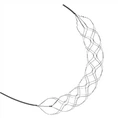
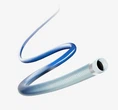
Neuro thrombectomy stent retriever is a self-expanding stent that can be delivered through a microcatheter into occluded large intracranial vessels. The device is designed to engage a thrombus causing large vessel occlusion (LVO) and remove it from circulation, thereby restoring intracranial blood flow. Considering these general principles of thrombectomy stent function, the design of the thrombectomy stent retriever must meet the following functional requirements:
1. With proper radial support force to release opening and self-expansion for good vessel adherence.
2. The ability to bind and embed thrombi in conditions of varying thrombus composition and density.
3. Capable of re-release and retrieval while minimizing thrombus rupture and distal thrombus embolism.
4. A high recanalization rate (ability to clear thrombus and restore blood flow on first release).
5. Minimize damage to the vessel wall during opening and removal.
6. In the event of incomplete or failed clot clearance, multiple re-releases can be performed within the target vessel.
Characteristics of Stent
Stent retriever devices can be constructed to exploit multiple variables in the stent design to achieve optimal performance and meet the above design requirements. These variables have previously been used to evaluate available medical stents, including those for endovascular use. Stoeckel and other members used 5 features of stents to classify all available medical stents previously. These characteristics are materials used, raw material form, manufacturing method, geometric configuration and stent additions.
Material
The material used for the stent retrieval depends on whether the stent is self-expanding or requires balloon expansion. Self-expanding stent retrievals are ideal because they do not require balloon placement, which may not be timely in acute stroke cases. Self-expanding stents also offer function of deployment easily compared to balloon-expandable stents. This requires a low elastic modulus and high yield stress. Or in the case of Nitinol, it needs high shape memory properties. Nitinol is a nickel-titanium alloy that can recover up to 10% of elastic strain. This allows for high elastic strain of these stents. Most thrombectomy stents are self-expanding stents based on Nitinol.
Raw Material Form
Stent raw material can take a number of different forms. These include sheet, tube, wire and ribbon (flat wire) forms. Sheet stents must be rolled into a tubular structure after forming. Variations in the form of raw materials exist in the available stents.
Fabrication Method
The fabrication method refers to the mechanical process by which the stent is formed and depends largely on the form of raw material used. Wires can be formed into stent by twisting, braiding or knitting techniques. Laser cutting is the most commonly used mechanism, and tubular metal is more commonly used for stents. Self-expanding stents can be cut small or expanded, after which they must be polished and surface-treated. Another possible technique is water jet cutting, which has an advantage over laser cutting in that it does not create a heat-affected zone on the cut surface. Most thrombectomy stents are manufactured using laser cutting.
Geometric Configuration
The geometry of the stent retriever is critical to the underlying functional requirements. Stent geometries configurations vary widely, and each design has advantages and disadvantages. Stoeckel classified stent geometries into five different categories: coiled, helical, braided, single loop, and concatenate loop.
Coiled designs are very flexible but have limited radial strength. They also have a low expansion ratio, which means that this geometry results in a higher profile device.
The helical stent is similar to a coiled design and thus has the high flexibility and low radial strength of a coiled stent. Longitudinal connections can be added to increase radial strength at the expense of some flexibility.
Braided designs consist of one or more wires that can be woven or knitted together. Some self-expanding stents take advantage of this geometry. However, For these types of stents, shortening is a significant issue.
Single loops are designed as Z-rings and are often used to support other implants. These structures are not usually used alone as vascular stents.
Continuous ring stents consist of a series of Z-shaped struts with connections between these struts called bridges or hinges. These connections can be regular, which means they occur at every inflection point on the circumference, or periodic, which means they occur at predetermined suborders of these inflection points.
Continuous ring configurations can be closed or open cell geometries. In a closed-loop element design, all internal inflection points of the structure are connected by bridges. Closed-loop cell designs provide good scaffolding and uniform surfaces regardless of curvature, but they are less flexible than open-loop cell designs. Some or all of the internal inflection points of an open-loop cell design are not connected to each other. Unconnected sections lead to a higher degree of structural flexibility at the expense of reduced radial strength.
Additions
Other additions of stent structure provide advantages in terms of fluoroscopic visualization, such as radiopaque markers or coatings, or functional advantages, such as drug-eluting coatings, biocompatible coatings, or hydrophilic coatings. Nitinol is the primary material of choice for the vast majority of thrombectomy stents, and radiopaque additions are often used in the manufacture of these stents due to their poor fluoroscopic visibility.