



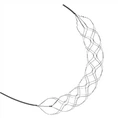

Acute large vessel occlusion without effective treatment can lead to large-area cerebral infarction. Compared with cerebral infarction caused by small artery occlusion, brain tissue ischemia is severe, the range of hypoperfusion is large, and the core infarction is rapidly transformed. Therefore, effective endovascular treatment is urgently needed for interventional recanalization. This article describes some related factors that may affect the clinical prognosis of patients after stent thrombectomy.
1. Age
With age, the individual's response to stroke and stress gradually decreases, the tolerance of nerve cells to ischemia decreases, and the core infarction is rapidly transformed. Age will become a factor that cannot be intervened to affect prognosis. At the same time, age is also a natural factor affecting arteriosclerosis. With age, arteriosclerosis gradually worsens, the corresponding vascular elasticity is poorer, the proportion of vascular distortion is high, the complexity of surgery is increased, the time of surgical recanalization is prolonged, and the vascular wall is easily damaged during thrombectomy, resulting in an increased risk of bleeding, and the corresponding prognosis is poor.
2. Granulocytes
Inflammatory response is involved in multiple stages of atherosclerosis formation. The activation of inflammatory response after acute ischemic stroke has been shown to be associated with secondary brain damage after ischemic stroke. Neutrophils are a special form of white blood cells and have been shown to be involved in brain tissue damage after stroke. In the early stages of inflammatory response, there is a gathering of neutrophils in the ischemic area of brain tissue, which can cause blood-brain barrier destruction by releasing inflammatory mediators. Studies have shown that poor prognosis is associated with high levels of neutrophil counts.
3. NIHSS score on admission
NIHSS score is used to evaluate the function of acute stroke, determine the neurological deficit, and preliminarily determine the severity of cerebral infarction. At the same time, it is of great significance for the evaluation of the prognosis of cerebral infarction. The higher the score, the more obvious the neurological deficit and the more severe the brain cell ischemia. It also indirectly reflects that the corresponding infarction area may be larger, while the low NIHSS score indicates that the neurological deficit is not obvious, the brain tissue ischemia is relatively mild, and the infarction area may be smaller, indicating that the probability of a good prognosis is greater.
4. Number of thrombectomy
Increased number of thrombectomy may be a factor affecting poor prognosis. Multiple passages of the thrombectomy device may damage the arterial intima, increase the risk of intracranial hemorrhage and reperfusion injury, and mechanical blood-brain barrier rupture may limit the good prognosis of these patients. Intima damage can cause abnormal platelet aggregation and local restenosis and occlusion, affecting vascular recanalization.
In summary, age, granulocytes, admission NIHSS score, and number of thrombectomy are all possible factors that affect the prognosis of stent thrombectomy of acute anterior circulation large vessel occlusion, but they are not the only influencing factors. There may be other influencing factors, which need to be studied and concluded by scholars.