



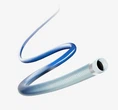
Neurovascular interventional catheter:
I. Material requirements
1. Good biocompatibility, especially blood compatibility, and no toxic substances should migrate or permeate in the body.
2. Good compliance, able to move naturally in the natural cavities of the human body such as blood vessels, and also require the catheter material to have good self-lubrication to reduce the damage to the vascular wall caused by the movement of catheter products in blood vessels or other natural cavities of the human body.
3. Able to transmit catheter torque well, which is conducive to the passage of catheters in natural channels.
4. Have a certain degree of pressure resistance and can adapt to applications in different internal environments.
II. Structure
1. Lubricated lining
First, the lubricated lining is placed on a very hard core. The expected characteristics of the lubricated core include high lubricity, ultra-thin structure and durability to avoid damage during device delivery.
2. Support skeleton
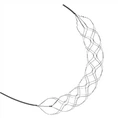
Compared with the relatively single optional lining, the support skeleton has countless options in terms of type, model, material and processing. Usually, the wire is applied to the lining in the form of coils or braids or both, and these wires can be round or flat.
3. Polymer outer tube
After the reinforcement material is added, a polymer sheath material is placed over the catheter shaft. This polymer material contains radiopaque metal fillers to increase its radiopacity.
4. Hydrophilic coating
The last step is to cover the catheter with a polyurethane-based hydrophilic coating solution. The hydrophilic coating quickly combines with water when it comes into contact with it, forming a hydration layer, making the surface very lubricated, greatly reducing the friction between the instrument and human tissue, while greatly improving the convenience of doctor operation and patient comfort, and avoiding possible complications such as friction damage and infection.
Microcatheter:
Microcatheter refers to a reinforced catheter with a very small diameter. There is no strict size definition, but it is common to call a small catheter with a diameter of 0.70-1.30 mm a microcatheter. It is used for guidewire support/exchange, passing through lesions, delivering embolic agents, stents, etc.
Due to its small structure, it is very suitable for "navigation and shuttle" in human blood vessels, so it is used by more and more doctors in minimally invasive interventional surgery.
Most microcatheters are designed with a lubricating coating, a soft tip (or angled) and an intermediate reinforcement layer. Among them, the intermediate reinforcement layer will have a huge impact on the performance of the microcatheter in terms of design and manufacturing. The intermediate reinforcement layer is a design method that uses metal wires to increase the strength and pushing force of the catheter by braiding or winding. Among the many microcatheters, this braiding or winding method is generally divided into four types: braiding, winding, braiding + winding (parallel) and braiding over winding (multi-layer). The choice of the four methods represents the requirements of different vascular lesions for the important performance of the microcatheter. For example, the design of braiding + winding has good proximal braiding and good distal winding softness, which is a very good choice for neurovascular delivery. For CTO lesions, high-hardness braiding can help it pass through calcification. Among them, by adjusting the density and pitch of braiding or winding, its push and flexibility can be changed accordingly.
With its small body, microcatheters have been applied in coronary arteries, peripheral arteries, nerves and many other fields. With the further advancement of medical materials science, microcatheters with excellent performance will continue to come out and become an important weapon for doctors to eliminate diseases.