


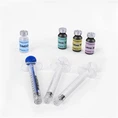
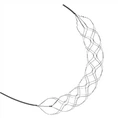
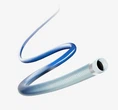
Direct aspiration first pass technique (ADAPT) is a thrombectomy method that uses a suction catheter to directly aspirate and remove the thrombus to achieve vascular recanalization. This method of thrombectomy is fast, safe, and effective. However, in ADAPT, there are many factors that affect the aspiration effect. The choice of support catheter, the caliber of the suction catheter, the aspiration method, the location of the occluded blood vessel, etc. may all affect the effect of aspiration and thrombectomy. This article will take you to understand the factors affecting ADAPT.
1. Proximal support catheter
The proximal support catheter is the basis for the successful establishment of the access for ADAPT, providing support and stability for the entire aspiration system. Different support catheters may affect the passability of the intermediate catheter and the ability to reach the proximal end of the thrombus near the embolism site, thereby affecting the aspiration effect. Commonly used proximal support catheters include long sheaths, balloon catheters or guide catheters. During the operation, it is necessary to comprehensively consider factors such as the patient's vascular anatomy and the compatibility of the catheter to select an appropriate proximal support catheter.
2. Aspiration catheter
The improvement of aspiration catheter performance has promoted the development of ADAPT. The inner diameter of the aspiration catheter is an important factor affecting the success rate of aspiration. The larger the inner diameter, the greater the aspiration force generated, and the higher the success rate of aspiration thrombus removal. The ratio of the inner diameter of the aspiration catheter to the inner diameter of the proximal blood vessel at the embolization site is also a factor affecting the success rate of aspiration. The larger the ratio, the higher the success rate of aspiration. The bevel design of the aspiration catheter tip can improve the aspiration effect.
3. Aspiration methods
The aspiration methods include continuous pressure aspiration with a aspiration pump, cyclic pressure aspiration with a aspiration pump, and manual aspiration with a 20~60ml syringe. The vacuum pressure generated by a 60ml syringe is higher than that of an automatic aspiration pump. In actual operation, manual aspiration is also safer and more effective, with lower economic costs. By comparison, the clearance rate and aspiration efficency of cyclic pressure aspiration with a aspiration pump are better than those of constant pressure aspiration.
4. Occlusion site and contact angle between thrombus and aspiration catheter
The location of vascular occlusion is related to the success rate of aspiration recanalization. Studies have shown that compared with internal carotid siphon segment occlusion or tandem lesions, isolated middle cerebral artery occlusion is a favorable factor for successful recanalization by aspiration thrombus removal. The angle between the aspiration catheter tip and the thrombus is also an important factor affecting the aspiration effect. The larger the angle, the better the aspiration effect. The possible reason is that the smaller the angle between the aspiration catheter and the thrombus, the greater the friction, which hinders the thrombus from being sucked into the catheter.
5. Thrombus properties
Thrombus composition affects the success rate of aspiration. Thrombus rich in red blood cells has a higher success rate of stent thrombectomy, and fibrin-rich thrombus has a higher success rate of ADAPT thrombectomy.
6. Patient-related factors
The younger the patient, the shorter the time from onset to surgery, and the greater the possibility of recanalization after thrombus aspiration. Young patients have good vascular conditions, fewer severe tortuosity and stenosis, and it is easy to establish access, and the aspiration catheter can easily reach the expected position. As time goes by, the thrombus interacts with the vascular wall and adheres firmly, increasing the difficulty of aspiration.
In summary, the success rate of ADAPT thrombectomy is affected by many factors. Before performing ADAPT, we can analyze the influencing factors based on the patient's actual situation and develop a plan that is more suitable for the patient to improve the success rate of ADAPT.