



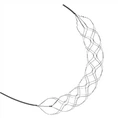
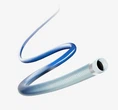
Detachable coils look like springs and are implanted into aneurysms or blood vessels through minimally invasive surgery to help block blood flow and prevent aneurysms from rupturing. Coil embolization is a classic, commonly used and highly effective surgical method for treating intracranial aneurysms and arteriovenous malformations.
The detachable coil is usually made of metal materials such as platinum, nickel-titanium alloy, and chromium alloy. These materials have good biocompatibility and can exist stably in the body for a long time without causing obvious rejection reactions. The coil is soft and compliant, and can freely coil and move forward and backward in the aneurysm. It can also be flexibly adjusted when the release position is not ideal.
Detachable coils work by filling the aneurysm cavity, inducing thrombosis and thus blocking blood flow. They have two advantages.
1. Reduce the risk of aneurysm rupture. When the coil is implanted in the aneurysm, blood forms many small vortices at the edge of the aneurysm, slowing down the blood flow. As the blood flow rate decreases, the pressure in the aneurysm cavity will also decrease, thereby reducing the risk of aneurysm rupture.
2. Strengthen the aneurysm occlusion effect. The coil will also attract negatively charged blood components (such as red blood cells, white blood cells, platelets, etc.) to undergo electrocoagulation or thrombosis, further strengthening the aneurysm occlusion effect.
Although the detachable coil can remain in the body for a long time, in rare cases, problems such as coil displacement, aneurysm recurrence or recanalization may occur. Therefore, patients need to undergo regular imaging examinations after surgery to detect the position of the coil and changes in the aneurysm. Once abnormalities are found, re-embolization or surgical intervention is required.