



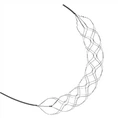

Intracranial arteriosclerosis (ICAS) is an important cause of acute large vessel occlusion (LVO) stroke in Chinese people. Due to the difficulty in identifying ICAS lesions, the complexity of diagnosis and treatment, the disability rate and mortality rate have remained high. This article will help you understand ICAS-LVO.
The clinical manifestations of ICAS-LVO are usually recurrent illness, and the worsening of symptoms is often accompanied by a history of multiple transient ischemic attacks or cerebral infarction. The incidence of ICAS-LVO in patients with posterior circulation stroke is higher than that in patients with anterior circulation stroke, and LVO caused by cardiogenic embolism is usually accompanied by atrial fibrillation-related abnormal heart rhythm characteristics. For patients with known severe ICAS and acute LVO, the possibility of ICAS-LVO lesions should be highly suspected.
Options for early endovascular treatment include stent thrombectomy, embolectomy with aspiration and Stent combined with aspiration thrombectomy, among which stent thrombectomy can treat acute anterior circulation LVO stroke, and direct embolectomy with aspiration and embolectomy is the first choice. SStent combined with aspiration thrombectomy is one of the most widely used thrombectomy methods in clinical practice, and should be selected according to the specific situation of the patient.
Reocclusion or thrombectomy failure during endovascular treatment is a common phenomenon in patients with ICAS-LVO. Therefore, salvage therapy is more commonly used in endovascular treatment of ICAS-LVO patients. Currently, the commonly used salvage treatment strategies in clinical practice include emergency balloon dilatation, stent placement, and salvage drug therapy.
Complications during early endovascular treatment of ICAS-LVO are relatively common, including target vessel dissection, target vessel or perforating artery perforation or rupture, thrombosis and detachment.
1. Target vessel dissection
After stent thrombectomy or balloon dilatation, the target vessel intima may be damaged or dissected. For arterial dissection that occurs during surgery, antiplatelet aggregation drugs or intravenous infusion of tirofiban can be given and observed. If the blood supply of the distal artery can be maintained, no treatment is required for the time being. However, for arterial dissection with obvious abnormal arterial blood flow perfusion, stent placement can be used for treatment according to the intraoperative situation.
2. Target vessel or perforator artery perforation or rupture
For intraoperative target vessel or perforator artery perforation or rupture complications, the main focus is on early prevention. Before surgery, appropriate catheters or instruments should be selected according to the patient's vascular path or arterial diameter. During surgery, the distal true lumen should be confirmed by microcatheterization before subsequent operations. If active bleeding of the target vessel is observed during surgery, heparin should be immediately neutralized, antiplatelet aggregation drugs should be discontinued, and blood pressure should be controlled. Balloon dilatation can be performed for temporary occlusion and then observed. If bleeding persists and cannot be relieved, coil embolization is feasible.
3. Thrombosis and detachment
Thrombotic complications are common complications of early endovascular treatment in patients with ICAS-LVO, including vascular reocclusion or thrombectomy failure caused by in situ thrombosis. Another thrombotic complication is "thrombus escape", including "thrombus escape" at the distal end of the occluded artery or in a newly formed artery. Remedial treatment measures include stent thrombectomy, aspiration thrombectomy, or arterial thrombolysis.