



Stroke is a devastating disease that can cause significant disability and death. Mechanical thrombectomy has emerged as the preferred treatment for acute ischemic stroke caused by large vessel occlusion. The main objective of mechanical thrombectomy is to remove the thrombus to restore blood flow to the brain and reduce the extent of brain injury. Aspiration catheters are commonly used as a part of the mechanical thrombectomy procedure to extract the thrombus from the arterial system. One of the key factors that determine the success of mechanical thrombectomy is the optimal size of the aspiration catheter in relation to the arterial diameter. In this article, we will review the available evidence on the optimal size of an aspiration catheter in relation to the arterial diameter during mechanical thrombectomy for stroke.
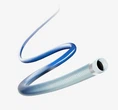
The mechanical thrombectomy procedure involves the insertion of a catheter through a femoral artery in the groin and the advancement of the catheter to the site of the occlusion in the brain. The catheter is then used to remove the thrombus from the occluded artery. Aspiration catheters are commonly used for this purpose. These catheters are inserted through the main catheter and are advanced until it reaches the site of the thrombus. The aspiration catheter then creates a suction effect that extracts the thrombus from the artery.
Various studies have investigated the optimal size of an aspiration catheter in relation to the arterial diameter during mechanical thrombectomy. These studies have shown that a larger aspiration catheter can extract a larger thrombus, but it also carries a higher risk of vessel dissection and perforation. On the other hand, a smaller catheter may be less effective in removing the thrombus, but it carries a lower risk of vessel injury.
Mechanical thrombectomy for acute ischemic stroke is effective and includes different technical approaches. Operators use direct aspiration, a stent retriever, or a combination of both. Direct aspiration can be performed with various catheters of different sizes depending on the diameter of the occluded vessel. A study also showed that an association between higher recanalization and a diameter of ratio >0.71 between the aspiration catheter and the occluded artery. These results could guide intraoperative decisions regarding the appropriate selection of aspiration catheters during mechanical thrombectomy increasing the rate of successful recanalisation. A larger study could provide additional data to further specify the optimal ratio. Despite these findings, the optimal size of an aspiration catheter in relation to the arterial diameter during mechanical thrombectomy for stroke should be determined on a case-by-case basis based on the anatomy of the target vessel, the size of the thrombus, and the operator's experience.
In summary, the optimal size of an aspiration catheter in relation to the arterial diameter during mechanical thrombectomy for stroke is an essential factor that determines the success and safety of the procedure. Larger aspiration catheters may be more effective in extracting the thrombus, but they also carry a higher risk of procedural complications. On the other hand, smaller catheters carry a lower risk of complication but may be less effective in removing the thrombus. The size of the catheter to be used should be determined based on the anatomy of the target vessel, the size of the thrombus, and the operator's experience. Further research is needed to develop guidelines on the optimal size of aspiration catheters in mechanical thrombectomy for stroke.