



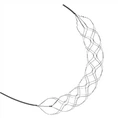
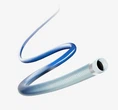
Intracranial aneurysm is a common cerebral vascular disease, which has attracted much attention because of its easy rupture and cerebral hemorrhage. In order to reduce the risk of tumor rupture, doctors usually choose embolization and coil selection to treat intracranial aneurysms.
Intracranial aneurysm embolization is a commonly used interventional treatment method in the field of modern neurosurgery. Compared with traditional surgical treatment, intracranial aneurysm embolization has many advantages. Traditional surgical treatment often requires large-scale destruction of the skull cap, and artificial blood vessels are used for connection, which is very difficult. Intracranial aneurysm embolization has the advantages of minimally invasive, fast recovery, and no impact on external beauty. It does not affect the life function of the surrounding normal tissues when treating the tumor, and the treatment effect is very good. At the same time, intracranial aneurysm embolization does not require long-term medication after surgery, which has a very significant effect on reducing the risk of tumor rupture.
Before performing intracranial aneurysm embolization, the choice of coils is also extremely important. The coil is a flexible implant that can change its shape at will. It can rotate and move inside the tumor and move with the rotation of the catheter. Therefore, when selecting the coil, the environment of its entry into the cave entrance must be fully considered, including the size, shape, position and other aspects of the cave.
In addition, there are many types of coils, such as worm-shaped coils, flat coils, spiral coils, etc. Doctors should also select coils according to different tumors. For example, flat coils are suitable for near-coronary artery or ruptured stenotic tumors. Helical coils are suitable for large or complex tumors. Worm-shaped coils are suitable for skull base and temporal lobe tumors.
The microcatheter shaping in intracranial aneurysm interventional embolization is to adapt to the vascular morphology in specific cases, so as to better perform surgical operations and embolization treatment. The specific microcatheter shaping steps are as follows:
Select an appropriate catheter: Select a suitable microcatheter according to the location and morphology of the patient's intracranial aneurysm. The catheter should be sufficiently soft and appropriately flexible.
Preoperative measurement: Before micro catheter shaping, vascular angiography is first required to determine the morphology of the blood vessels and the location of the lesions. This helps guide subsequent shaping operations.
Micro catheter entry: According to the morphology of the blood vessels and the results of preoperative measurements, the microcatheter is inserted into the blood vessel close to the aneurysm, and the catheter end should be kept in the target position of the blood vessel.
Microcatheter shaping: While the catheter is incision, the catheter is gradually shaped into a curve that adapts to the blood vessel by gently pushing, pulling, rotating and bending the microcatheter. Pay attention to the gentle force throughout the process to prevent damage to the blood vessel wall.
Follow-up angiography: After completing the microcatheter shaping, angiography is performed to ensure the accuracy of the catheter morphology and position. If necessary, the shaping of the catheter can be adjusted to better adapt to the vascular morphology.
Microcatheter shaping and coil selection in intracranial aneurysm embolization are one of the important factors that determine the effect of the operation. The selection of appropriate packing materials and coils greatly improves the success rate and safety of the operation and reduces the operating burden of the doctor. Appropriate and correct shaping and the selection of appropriate packing materials and coils can effectively reduce complications and rupture rates, and bring patients a better treatment experience and effect.
It is believed that through the treatment of intracranial aneurysm embolization and coil selection, the cure rate of the tumor will be greatly improved, and it can also help patients reduce the risk of tumor rupture, thereby improving the treatment effect. Intracranial aneurysm embolization and coil selection are one of the important treatment methods in the field of modern neurosurgery. Doctors need to be fully prepared and perform meticulous operations during the treatment process to help patients get rid of the troubles caused by the tumor and regain their health.