



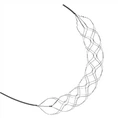

Stroke is one of the leading causes of mortality worldwide, and acute ischemic stroke (AIS) accounts for the majority of these cases. While the mainstay of AIS treatment is the administration of thrombolytic agents, mechanical thrombectomy has increasingly become an important therapeutic option for patients with large vessel occlusion (LVO) stroke. In this review, we compare the outcomes of contact aspiration and stent retriever versus stent retriever alone following mechanical thrombectomy for AIS patients, with a focus on positive aspects of these interventions.
Background
The major goal of mechanical thrombectomy in AIS patients is to restore blood flow to the occluded vessel as soon as possible, and thereby prevent or minimize neuronal damage. Two main types of devices are commonly used for mechanical thrombectomy: stent retriever and aspiration catheters. Stent retrievals are used to engage the clot directly and remove it from the vessel, while aspiration catheters remove the clot via a vacuum technique. However, studies have shown that the combination of these two approaches may provide greater success in clot removal, and improve functional outcomes for patients.
Advantages of contact aspiration and stent retriever
The use of contact aspiration and stent retriever in mechanical thrombectomy has several advantages over stent retriever alone. Firstly, contact aspiration and stent retriever may improve the rate of successful reperfusion of the occluded vessel, as the vacuum technique is more effective in removing distal fragments of the clot. Secondly, with contact aspiration and stent retriever , the procedure time may be reduced, as the clot can be removed with fewer attempted passes. This reduces the risk of complications such as vessel perforation or re-occlusion. Thirdly, the use of stent retriever has been shown to improve functional outcomes for patients at 90 days post-treatment. This improved functional outcome is likely due to the more extensive removal of the clot, leading to better reperfusion and less neuronal damage.


Clinical data supporting contact aspiration and stent retriever
Recent clinical studies have shown the benefits of contact aspiration and stent retriever over stent retriever alone. A 2017 meta-analysis by Goyal et al. demonstrated that the use of CAS was associated with higher rates of successful reperfusion (odds ratio 1.52), lower incidence of embolization in new territories (odds ratio 0.36), and better functional outcomes at 90 days post-treatment (odds ratio 1.71). Another study by Bracard et al. found that the use of contact aspiration and stent retriever improved reperfusion rates in AIS patients with large vessel occlusions, and was associated with better outcomes at 3 months, as measured by the modified Rankin Scale.
Limitations and future directions
While the use of contact aspiration and stent retriever in mechanical thrombectomy for AIS patients has shown multiple advantages, there are also some limitations to consider. The use of contact aspiration and stent retriever requires a minimum level of experience and skill from the operator, to avoid complications such as vessel perforation or dissection. The availability of contact aspiration and stent retriever devices may also be limited in certain geographic areas, or in hospitals with limited resources. Finally, there are currently no guidelines for the selection of patients who may benefit most from contact aspiration and stent retriever.
Conclusion
The use of CAS in mechanical thrombectomy for AIS patients has multiple advantages over SR alone. It may improve rates of successful reperfusion, reduce procedure time, and improve functional outcomes at 90 days post-treatment. While there are some limitations to consider, the benefits of CAS suggest that it should be considered as a first-line option for AIS patients with large vessel occlusions. Future studies should aim to identify the optimal patient populations for CAS treatment, and to improve device technology to further enhance its efficacy and safety.