




Neurointerventional techniques have revolutionized stroke treatment. One such technique is BADDASS (Balloon Augmented Direct Aspiration with Stent and Snare) retrieval, which has been found to be effective in removing clots in acute ischemic stroke.
BADDASS Retrieval Technique
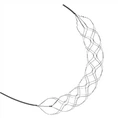
BADDASS retrieval involves the use of a stent retriever, a distal access catheter, and a balloon guide catheter. The stent retriever, usually a self-expanding device, is deployed in the occluded vessel, and the balloon guide catheter is inserted in the proximal part of the artery to establish flow arrest. A distal access catheter is advanced through the stent retriever to the clot, and aspiration is performed through the catheter to extract the clot.
Benefits of BADDASS Retrieval
BADDASS retrieval has several benefits over other neurointerventional techniques. One of the advantages is that it allows for a higher rate of recanalization. Recanalization is the restoration of blood flow to an occluded vessel, and it is critical to ensure that brain tissue is not irreversibly damaged due to ischemia. Studies have shown that BADDASS retrieval has a recanalization rate of up to 87%, which is higher than other techniques such as mechanical thrombectomy.
Another benefit of BADDASS retrieval is that it reduces procedure time. The use of a balloon guide catheter and distal access catheter facilitates rapid clot retrieval, resulting in shorter procedure times. This is crucial in acute ischemic stroke because time is of the essence, and delays in treatment can lead to irreversible brain damage.
BADDASS retrieval is also associated with a lower rate of embolization and distal migration. Embolization occurs when fragments of the clot break off and travel downstream, causing further blockages. Distal migration occurs when the clot moves from its original location, making it difficult to remove. The use of a balloon guide catheter reduces the risk of embolization and distal migration.
Considerations for BADDASS Retrieval
BADDASS retrieval is a relatively new technique, and there are several considerations to take into account before adopting it as a standard of care. One consideration is that the procedure requires specialized training and expertise. Interventional radiologists and neurosurgeons with experience in neurointerventional procedures are best suited to perform BADDASS retrieval.
Another consideration is the cost. BADDASS retrieval requires the use of specialized equipment, which can be expensive. However, the cost may be justified by the improved outcomes and reduced need for repeat procedures.
BADDASS retrieval is a promising neurointerventional technique that has been found to be effective in removing clots in acute ischemic stroke. The benefits of BADDASS retrieval include higher rates of recanalization, shorter procedure times, and lower rates of embolization and distal migration. However, the procedure requires specialized training and expertise and can be expensive. Despite these considerations, BADDASS retrieval has the potential to revolutionize stroke treatment and improve outcomes for patients.