



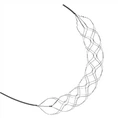

Intracranial aneurysms are potentially fatal vascular lesions, and their rupture may cause subarachnoid hemorrhage, seriously threatening the patient's life. Aneurysm embolization uses a catheter to deliver embolic materials into the aneurysm through an intravascular route, isolating it from the blood flow and achieving the treatment goal. However, this minimally invasive treatment method is not without risks. Intraoperative and postoperative complications, such as thrombosis, displacement of the coil, and aneurysm rupture and bleeding, may have an adverse effect on the patient's prognosis. This article tells you how to prevent some common complications and how to deal with complications when they occur.
1. Intraoperative thrombotic events
How to prevent?
First, heparinization should be fully applied. If stent implantation is performed, adequate antiplatelet therapy is required before/during the operation. Secondly, the coaxial system should be continuously infused to prevent the guiding catheter or intermediate catheter from continuously pushing against one side of the blood vessel, causing endothelial damage and thrombosis. When the coil protrudes, a remedial stent should be implanted if necessary. During the operation, the stent should be kept open and well attached to the wall, and the operation should be gentle to reduce repeated or ineffective operations and avoid endothelial damage.
How to deal with it?
If thrombosis occurs during the operation, the thrombus load is small or the thrombus is located in the distal branch, tirofiban or urokinase can be infused intra-arterially or intravenously. When the thrombus load is large or the main artery is occluded, intravascular mechanical thrombectomy can be attempted.
2. Aneurysm rupture during surgery
How to prevent it?
First, the microcatheter should be properly shaped to reduce the operation of the guidewire in the aneurysm cavity and ensure the adjustability of the microcatheter during the coil embolization process. When packing the coil, the size and hardness should be appropriate to avoid over-packing. If there is obvious resistance during the packing process, do not force the packing, and withdraw the microcatheter if necessary. At the same time, pay attention to the impact of stent release on the position of the microcatheter and make timely adjustments.
How to deal with it?
Once a rupture occurs, protamine can be used to immediately neutralize heparin and quickly perform dense packing of the aneurysm. If the position of the microcatheter is not ideal, or it is judged that the bleeding is located at the neck of the aneurysm, it is best to cooperate with temporary blockage, including temporary balloon blockage, coil blockage, compression of the carotid artery, etc.
3. Spring coil displacement
How to prevent it?
If the wide-necked aneurysm is embolized with a simple coil, a slightly larger diameter basket coil can be selected. For wide-necked aneurysms, stent-assisted embolization can be selected as much as possible. For small aneurysms, stent-assisted embolization with a small mesh is safer.
How to deal with it?
If the displacement of the coil occurs before the coil is released, the coil is first retrieved or the balloon or stent-assisted technology is used to continue the embolization; if the partial protrusion, displacement or untwisting of the coil occurs after the coil is released, if the coil has no obvious pulsation and does not affect blood flow, no special treatment is required, and antiplatelet aggregation drugs can be given as appropriate. When the displaced or untwisted coil affects the blood flow, the coil can be removed with the help of a thrombectomy stent; if the coil cannot be removed, the stent can be placed to stabilize the coil in the aneurysm, and active anticoagulation and antiplatelet aggregation treatment can be given after surgery to prevent ischemia.
In short, the treatment of aneurysms requires understanding the overall situation of the aneurysm and the parent artery, so as to formulate an appropriate treatment plan, select appropriate materials, perform gentle and meticulous operations during the operation, and use standardized medications to minimize the occurrence of complications. Once complications occur, they must be responded to and handled in a timely and correct manner.