



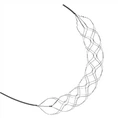
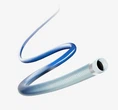
Intracranial aneurysm is a common cerebrovascular disease in clinical practice, which mainly occurs at the main branches of the basilar artery of the patient. When the patient has diseases such as hypertension, the aneurysm is very likely to rupture, causing subarachnoid hemorrhage, which seriously endangers the patient's life and health. Therefore, patients with intracranial aneurysms should take treatment measures as soon as possible to control the progression of the disease. Currently, the main clinical treatment methods are clipping or interventional embolization.
Stent implantation assisted coil embolization is a new technology for treating cerebral aneurysms. It uses a microcatheter to allow the coil to enter the aneurysm to form a thrombus, thereby improving the patient's condition. It has many advantages in treating intracranial aneurysms.
Compared with traditional clipping, interventional embolization has better curative effect and shorter operation time. Traditional clipping surgery requires craniotomy of patients, which is difficult to operate and extremely tests the operating ability of the attending physician, and has a low tolerance for surgical errors. In addition, craniotomy produces severe stress stimulation on the body, and patients need to be hospitalized for a long time after surgery to observe the recovery of various indicators of the body. Interventional treatment has small incisions and is only performed in the patient's blood vessels. After establishing an arterial access, an arterial catheter and guidewire are used for operation, and a coil is placed at the aneurysm to block the blood supply, effectively reducing the risk of aneurysm rupture. When blood passes through the aneurysm, tiny vortices are formed to reduce the flow rate and reduce the pressure inside the aneurysm, thereby achieving better treatment effects.
Stent implantation and coil embolization is less invasive and is performed only in the patient's blood vessels using puncture technology, minimizing damage to tissues surrounding the aneurysm and avoiding adverse conditions such as hydrocephalus and cerebral vasospasm after surgery. In addition, the grid formed by the stent and coil during treatment is relatively flat, which makes the newly grown intima stronger and flatter after surgery, creates a good foundation for the growth of vascular endothelium, helps reshape the tumor-bearing blood vessels, and reduces the risk of postoperative complications.
In conclusion, interventional treatment of intracranial aneurysms using stent implantation assisted by coil embolization is more effective, has shorter operation time, improves patients' perioperative indicators, has a lower risk of postoperative complications, and has high surgical safety.