



Intracranial aneurysms can be defined as thin-walled spherical structures formed by the outward expansion/dilation of a weak part of the arterial wall. They are most common at the bifurcation of an artery and can cause nerve damage by compressing nerve tissue and rupturing and bleeding.
Intracranial aneurysms are the main cause of hemorrhagic stroke. They are usually asymptomatic, but severe cases can cause pressure effects on the nervous system, subarachnoid hemorrhage, and vascular spasm. The sizes of aneurysms are mainly divided into three types: small, large, and giant. The diameter of a small one is less than 10 mm, the diameter of a large one is 10 to 20 mm, and the giant one is greater than 20 mm.
There are many treatment options for intracranial aneurysm surgery, the most well-known of which are aneurysm clipping, aneurysm bypass, detachable coil embolization, stent-assisted embolization, balloon-assisted embolization, etc. In general, there are two treatment methods for intracranial aneurysm surgery: open surgery and interventional surgery. Both are very effective for aneurysms. The choice of method depends on the final discussion between the doctor and the patient.
The development of intracranial aneurysm treatment has a long history. From angiography in 1927 to temporary aneurysm occlusion with balloon catheter in 1964, to mechanical occlusion of aneurysms with detachable balloon in 1973, to free coil embolization of intracranial aneurysms in 1985, to detachable coil embolization of intracranial aneurysms in 1981, and to the rapid development of detachable coil embolization of intracranial aneurysms in 1990.
As can be seen from the time, the development of interventional treatment of intracranial aneurysms is extremely rapid. In order to improve the safety, accuracy and dense embolization rate of detachable coil embolization, the designs of different microcatheters and coils are both standardized and distinctive.
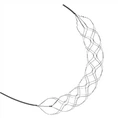
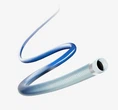
Neurosafe's Renova detachable coil system is designed to occlude or block blood flow in neurovascular and peripheral vascular abnormalities via an endovascular approach. It has the following five characteristics:
1.Optimized Shapes
The first1.5loops are 25% smaller than the stated secondary coil diameter,reduced risk of coil herniation; Open center design, allowing for concentric filling.
2.Proprietary instant mechanical detachment system by manual break; Shorter detachment zone, greatly minimizes kick-back microcatheter; Detachment tactile sense and visual sense duplex feedback, more reliable.
3.Hybrid delivery shaft features a balanced flexibility and pushability, smooth delivery.
4.From frame to finish, various softness levels and sizes cover a variety of cases.
5.Frame securely, fill uniformly and finish by seeking voids within the aneurysm.