



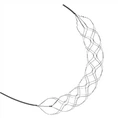

Stroke is a leading cause of death and disability globally, and timely treatment is critical to improve outcomes for patients. Mechanical thrombectomy is a minimally invasive procedure that involves removing a blood clot from a blocked artery in the brain. This procedure has revolutionized stroke care, and aspiration catheters are an integral component of the technique.
An aspiration catheter is a small, flexible tube that is inserted into the blocked artery in the brain and enables suction to remove the clot. The catheter is connected to a powerful suction device that creates a vacuum, allowing the clot to be removed quickly and effectively. The procedure is performed under local or general anesthesia, depending on the patient's condition.
This technology has transformed stroke care, as it offers several advantages over traditional treatments. It has a higher success rate with fewer complications and a quicker recovery time for the patient. Furthermore, it can be used in patients who are not suitable for other treatments or have unsuccessfully undergone those treatments.
Aspiration catheters have been shown to improve patient outcomes significantly. Studies have shown that mechanical thrombectomy with aspiration catheters can restore blood flow to the brain rapidly, minimizing the risk of further damage to brain tissue. Patients treated with this technique also have a higher chance of retaining their independence and being discharged home rather than to a rehabilitation facility.
In addition, this revolutionary technology has enabled more stroke patients to receive the treatment they need. Aspiration catheters have made it possible to treat patients who are located far from a stroke center or who cannot be transported to a clot removal center for treatment.
The future of aspiration catheters for mechanical thrombectomy looks promising with the development of advanced catheters that can handle larger and more complex clots. As the technology continues to improve, it is hoped that even more patients will benefit from the treatment provided by aspiration catheters.
In conclusion, aspiration catheters for mechanical thrombectomy have transformed stroke care and saved countless lives. This advanced technology is minimally invasive, has a high success rate, and has enabled more patients to receive lifesaving treatment. With continued advancements, the future looks bright for the use of aspiration catheters in stroke care, and we can hope that more people will have access to this revolutionary technology.