



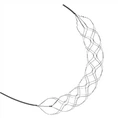

Stroke is a medical emergency that occurs when blood flow to the brain is disrupted. One of the primary causes of stroke is a blood clot that blocks a blood vessel in the brain. This condition is known as an ischemic stroke and requires urgent treatment to prevent lasting damage to the brain. One of the most effective treatments for ischemic stroke is mechanical thrombectomy, a procedure that involves removing the clot and restoring blood flow to the brain.
In 2015, stent retrievers revolutionized the field of mechanical thrombectomy by providing a new level of precision and speed in removing large vessel clots. However, aspiration has been an alternative technique for decades and has recently gained attention as a non-inferior method of clot removal. Aspiration involves removing the clot by suction rather than using a stent retriever to trap and remove it.
Recent studies have shown that aspiration can be just as effective as stent retrievers for removing large vessel clots. In fact, the ASTER trial (Aspiration versus Stent Retriever for Successful Revascularization) found that the rate of successful revascularization was similar between the two methods. Moreover, the risk of complications, such as vessel perforation, was lower in aspiration compared to stent retrievers.
One of the benefits of aspiration is that it is a simpler and less expensive method compared to stent retrievers. Additionally, it may be more accessible in areas where stent retrievers are not available or affordable. As a result, aspiration may be a more feasible option for stroke patients in many parts of the world.
Another advantage of aspiration is that it can be performed rapidly, which is crucial in treating stroke patients. In some cases, every minute counts, as the longer the brain is deprived of oxygen, the greater the risk of permanent brain damage or death. Therefore, a faster and more straightforward procedure like aspiration may be an advantage in some cases.
Adopting aspiration as a primary mechanical thrombectomy technique may require some changes in practice and training for healthcare providers. However, its relative simplicity and lower cost could make aspiration a more attractive option for a wider range of healthcare centers. Therefore, it is important to continue to evaluate the effectiveness and feasibility of aspiration in treating ischemic stroke.
In summary, aspiration has emerged as a viable alternative to stent retrievers for the removal of large vessel clots in stroke patients. The ASTER trial demonstrated that aspiration was non-inferior to stent retrievers, with lower risks of complications. Additionally, the simplicity and lower cost of aspiration make it a more feasible option in many regions of the world. As we continue to explore various mechanical thrombectomy techniques, aspiration holds great promise for stroke patients and healthcare providers.