




Intracranial ischemic stroke is caused by blood clots blocking the blood vessels in the brain, leading to ischemia and hypoxia of local brain tissue, and then necrosis. Once the disease occurs, the patient may experience symptoms such as limb weakness, slurred speech, crooked mouth, blurred vision, and even fall into a coma in severe cases, which is life-threatening. Moreover, even if the patient survives the disease, they often have sequelae of varying degrees, such as limb paralysis and cognitive impairment.
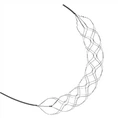
The main function of the thrombus removal stent is to remove the thrombus that blocks the blood vessel. It is a medical device made of special materials with good flexibility and support. In actual use, the doctor will carefully send the microcatheter along the blood vessel path to the location of the thrombus through vascular intervention, and then release the thrombus removal stent into the thrombus through the microcatheter. The thrombus removal stent will open and fit tightly with the thrombus. The doctor will then slowly remove the thrombus removal stent together with the thrombus, so that the blocked blood vessel can be restored and the blood supply to the brain can be restored.
The thrombectomy stent is not suitable for all patients with intracranial ischemic stroke. It has relatively clear applicable conditions. Generally speaking, the thrombectomy stent has a good therapeutic effect on intracranial ischemic stroke caused by large vessel occlusion. For example, when large blood vessels such as the terminal end of the internal carotid artery and the M1 segment of the middle cerebral artery are blocked, the thrombi in these areas are usually large in size and hard in texture. It may be difficult to completely remove the thrombi by relying solely on drug thrombolysis, and the powerful grasping ability of the thrombectomy stent can come in handy. In addition, thrombectomy treatment has a strict time window limit, and it is usually recommended to be performed within 6-24 hours after onset. Of course, the effect will be better if the treatment can be carried out in a shorter time. Because brain tissue is very sensitive to ischemia, every minute and every second of delay may cause more nerve cell death and affect the patient's prognosis.
Before performing thrombectomy stent treatment, the doctor will first conduct a comprehensive assessment of the patient, including detailed inquiries into the medical history, neurological examinations, and the use of imaging examinations such as cranial CT, MRI, and cerebral angiography (DSA) to accurately understand the patient's condition and determine whether the thrombectomy stent is suitable for treatment.
During the treatment, patients generally need to be under local or general anesthesia. The doctor will first puncture the patient's groin and insert a thin catheter (vascular sheath) into the femoral artery to establish a channel to the brain blood vessels. Then, the guide catheter is gradually sent along the vascular path to the area close to the thrombus through the vascular sheath to play a supporting and guiding role. Then, with the assistance of the guide catheter, the microcatheter is carefully sent to the thrombus, and the thrombectomy stent is accurately released into the thrombus through the microcatheter. After the thrombectomy stent is fully opened and tightly combined with the thrombus, the doctor will slowly pull the thrombectomy stent out of the body together with the thrombus. Finally, the patency of the blood vessels is checked again through cerebral angiography to ensure that the thrombus is effectively removed and the blood vessels restore good blood flow.
Compared with traditional drug thrombolytic therapy, thrombectomy with stents has many obvious advantages. It can directly remove the thrombus from the blood vessel, and has a higher recanalization rate for large vessel occlusion, greatly improving the treatment effect. Moreover, it can restore the blood supply to the brain in a shorter period of time, reduce the death of nerve cells, thereby reducing the risk of severe disability in patients and improving the quality of life of patients.