


The use of large bore aspiration catheters has revolutionized the management of acute ischemic stroke. These catheters offer a minimally invasive option for removing the blood clots that cause stroke, allowing for faster and more effective stroke treatment. In this article, we will explore the application of large bore aspiration catheters in the management of acute ischemic stroke.
The most common cause of stroke is a blockage in the blood vessels that supply the brain with oxygen and nutrients. This blockage is usually caused by a blood clot that forms within the artery. The longer the blockage remains, the greater the damage to the brain tissue. This is why it is essential to remove the clot as quickly as possible.
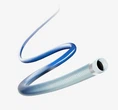
Large bore aspiration catheters are designed to do just that. They are inserted into the affected artery and advanced to the location of the clot. Once there, the catheter is used to suction the clot from the vessel, restoring blood flow to the brain. This is known as mechanical thrombectomy.
Mechanical thrombectomy is a highly effective treatment for acute ischemic stroke. Studies have shown that patients who undergo this procedure have a significantly higher rate of functional independence and a lower risk of mortality than those who receive standard medical therapy alone. In fact, the American Heart Association recommends mechanical thrombectomy as the preferred treatment for eligible patients with acute ischemic stroke.
One of the key advantages of large bore aspiration catheters is their ability to restore blood flow to the brain quickly. In some cases, the procedure can be completed in as little as 30 minutes. This is in contrast to standard medical therapy, which can take several hours to take effect. The faster the blood flow is restored, the less damage is done to the brain tissue, improving the patient's chances of a full recovery.
Another advantage of large bore aspiration catheters is their versatility. They can be used in a variety of different scenarios, including in patients who are ineligible for intravenous thrombolysis, those with large or proximal clots, and those with a high National Institutes of Health Stroke Scale (NIHSS) score. This allows for more patients to be eligible for mechanical thrombectomy, improving overall stroke care.
The use of large bore aspiration catheters has also greatly expanded the treatment window for acute ischemic stroke. Traditionally, mechanical thrombectomy could only be performed within the first 6 hours of symptom onset. However, recent studies have shown that the procedure can be performed up to 24 hours after onset in select patients. This allows for more patients to receive optimal stroke care, even those who may not have presented within the traditional treatment window.
All in all, the application of large bore aspiration catheters has greatly improved the management of acute ischemic stroke. These catheters offer a minimally invasive, highly effective option for removing blood clots, restoring blood flow to the brain, and improving patient outcomes. With their versatility and expanded treatment window, more patients are eligible for mechanical thrombectomy than ever before. As we continue to advance our understanding of stroke treatment, large bore aspiration catheters will undoubtedly play a vital role in optimizing stroke care.