



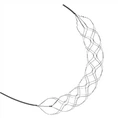

Coil embolization is an effective treatment for unruptured cerebral aneurysms. It entails the placement of platinum coils inside the aneurysm with the aim of interrupting blood flow, causing thrombosis, and preventing rupture. Different tools and techniques are used during the procedure to ensure successful coil embolization. One of these tools is the intermediate catheter (IC), which has been shown to be useful in achieving complete aneurysm occlusion and dense packing.
IC is a long, flexible, and thin catheter that is inserted into the parent artery and advanced beyond the aneurysm neck. It serves as a conduit for coil delivery and helps in maintaining stable positioning. IC enhances coil selection, deployment, and packing density, as well as prevents coil herniation and prolapse into the parent vessel.
Several studies have demonstrated the benefits of IC use in coil embolization of unruptured cerebral aneurysms. Gaurav Goel et al. (2018) conducted a retrospective analysis of 268 aneurysms treated with coil embolization and found that the use of an IC was associated with higher rates of complete occlusion (OR=2.06, p=0.044) and dense packing (OR=2.08, p=0.025) than without it. The authors concluded that IC use is an independent predictor of occlusion and packing density and recommended its routine utilization in coil embolization.
Similarly, Naveen Naidu et al. (2014) conducted a prospective study of 162 aneurysms treated with coil embolization and showed that IC use was significantly associated with higher packing density (p<0.001) and complete occlusion rates (p=0.008). The authors suggested that IC facilitates coil manipulation and enhances visualization, leading to better coil packing and improved outcomes.
Furthermore, a systematic review and meta-analysis by Tara Garlinghouse et al. (2019) included 18 studies with a total of 3,704 patients and showed that IC use was associated with higher rates of complete occlusion (OR=1.31, p<0.001) and a lower risk of aneurysm recurrence (OR=0.75, p=0.049). The authors recommended the routine use of IC in coil embolization of unruptured cerebral aneurysms to achieve optimal outcomes.
IC use is not without risks, and complications such as arterial dissection, thrombosis, rupture, and vasospasm have been reported. However, the benefits of IC use in achieving complete aneurysm occlusion and dense packing outweigh the risks, particularly in experienced hands. Proper training, technique refinement, and adherence to safety protocols are necessary to minimize complications associated with IC use.
In summary, IC use is an important tool in achieving successful coil embolization of unruptured cerebral aneurysms. Its use is associated with higher rates of complete occlusion and dense packing, leading to improved outcomes. By enhancing coil selection, deployment, and packing density, IC use provides a safe and effective strategy for treating unruptured cerebral aneurysms. Further clinical trials and long-term follow-up studies are needed to ascertain the optimal use of IC in coil embolization.