



Analysis of Key Performance
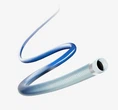
The key performance indicators of the thrombus aspiration catheter mainly include the following points: 1. Position performance; 2. passability; 3. lumen negative pressure resistance; 4. tip head end negative pressure resistance; 5. inner diameter catheter; 6. good visibility.
1. Position Performance
The primary performance of a thrombus aspiration catheter is the catheter's position performance. If the catheter cannot reach the target vessel smoothly, subsequent operations will be impossible. Furthermore, due to the tortuous anatomical structure of intracranial blood vessels, the catheter's position performance is further improved. The soft distal end of the catheter and a good intermediate transition section determine the catheter's deployment performance.
2. Passability
Another important performance of the catheter is passability. Passability refers to the operator's ability to manipulate the catheter to reach the target blood vessel, which is related to the frictional resistance between the outer surface of the catheter and the inner wall of the blood vessel or sheath, as well as the friction between the inner wall of the catheter and the outer wall of the lined catheter. Related to resistance. PTFE Liner with extremely low friction coefficient is often used as the inner layer of the catheter to reduce the friction resistance between the catheter and the lined catheter during the transportation process, and the surface of the catheter is usually coated with a super-slippery hydrophilic coating to reduce the frictional resistance between the outer surface of the catheter and the blood vessel or sheath during the delivery process.
3. Lumen Negative Pressure Resistance
The working principle of the thrombus aspiration catheter is that when the external aspiration pump or syringe generates negative pressure, the catheter aspirates or sucks the thrombus and takes it away from the body. The inner cavity of the catheter needs to withstand a certain negative pressure during this process. This requires the catheter lumen to have a certain ability to withstand negative pressure. That is, the catheter will not be deflated under the action of negative pressure.
4. Tip Head End Negative Pressure Resistance
Under the action of negative pressure, the shape of the tip of the thrombus aspiration catheter is closely related to the aspiration effect. If the tip deforms when aspiration is turned on, the aspiration efficiency will be reduced. The r refers to the inner diameter of the tip end and the inner diameter of the catheter. Therefore, the shape of the tip end under negative pressure determines the suction effect.
5. Inner Diameter Catheter
According to the description of the aspiration flow rate principle in the previous tweet "Analysis of the Aspiration Principle of Intracranial Thrombosis Aspiration Catheter ", it can be seen that the inner diameter of the catheter is a key factor affecting the aspiration efficiency, which is also the current aspiration catheter product on the market. The reason for pursuing a higher inner diameter under the same outer diameter.
6. Good Visibility
The good visualization of the distal end of the catheter can indicate the doctor the distance between the tip of the catheter and the thrombus, so that the doctor can accurately judge the contact between the tip and the thrombus, and then determine the time point to start negative pressure aspiration to improve thrombus aspiration effect greatly.